
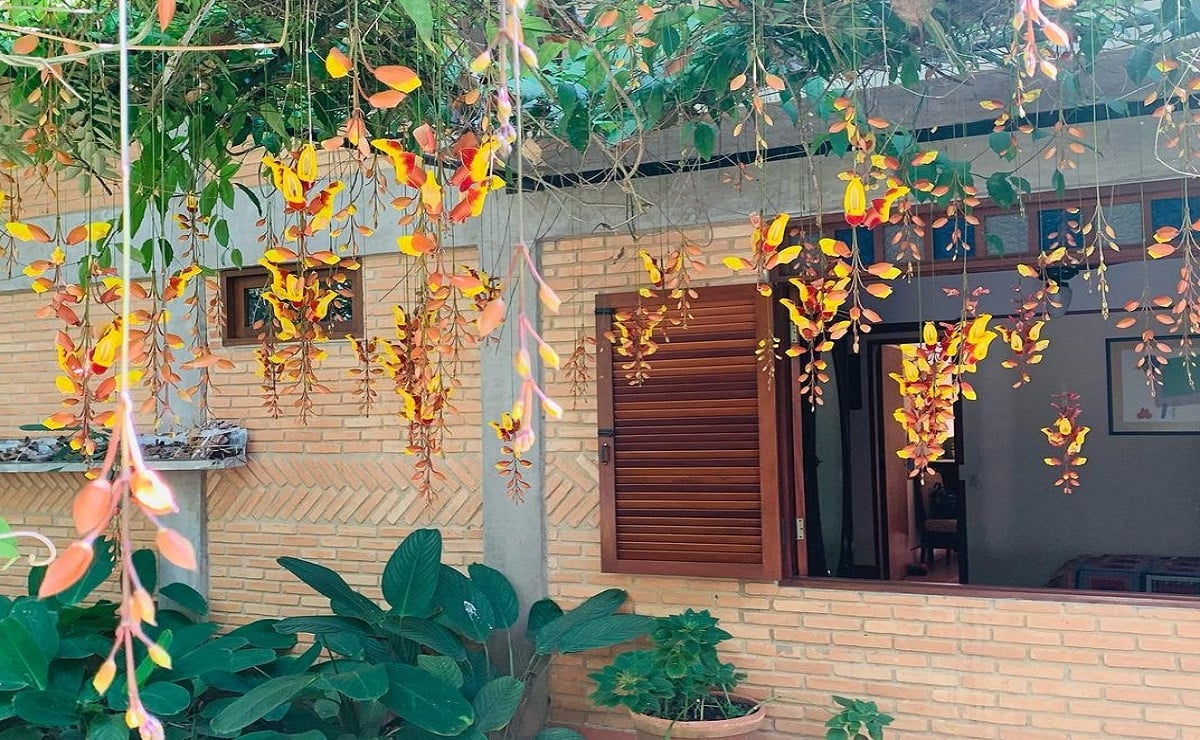
The Jewish slipper is a plant native to India that will win your heart. With exuberant flowers that do not go unnoticed, the species is perfect for composing outdoor areas and gardens, ensuring a cheerful and lively decoration. Next, learn how to grow it at home!
What is the jewish shoe
Jew’s shoe, or Thunbergia mysorensis, is a climbing plant known for its exotic, pendant flowers. According to the gardener Flavia Kremer, “the species is easy to grow and has great ornamental value”. In nature, it is possible to find it with a mix of colors, between yellow, orange and brown.
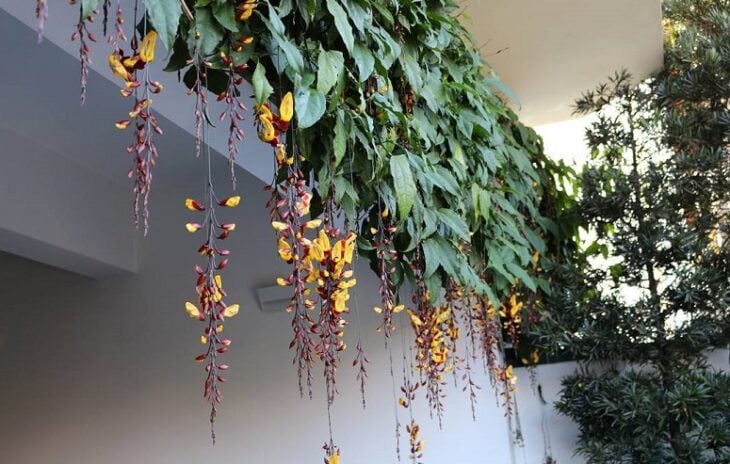
In terms of decoration, the charm of the plant is in the pendant growth that can please different styles. The flower looks beautiful on walls, hedges and pergolas. In addition, potted cultivation also brings an air of delicacy to environments.
Why the name ‘jewel slipper’?
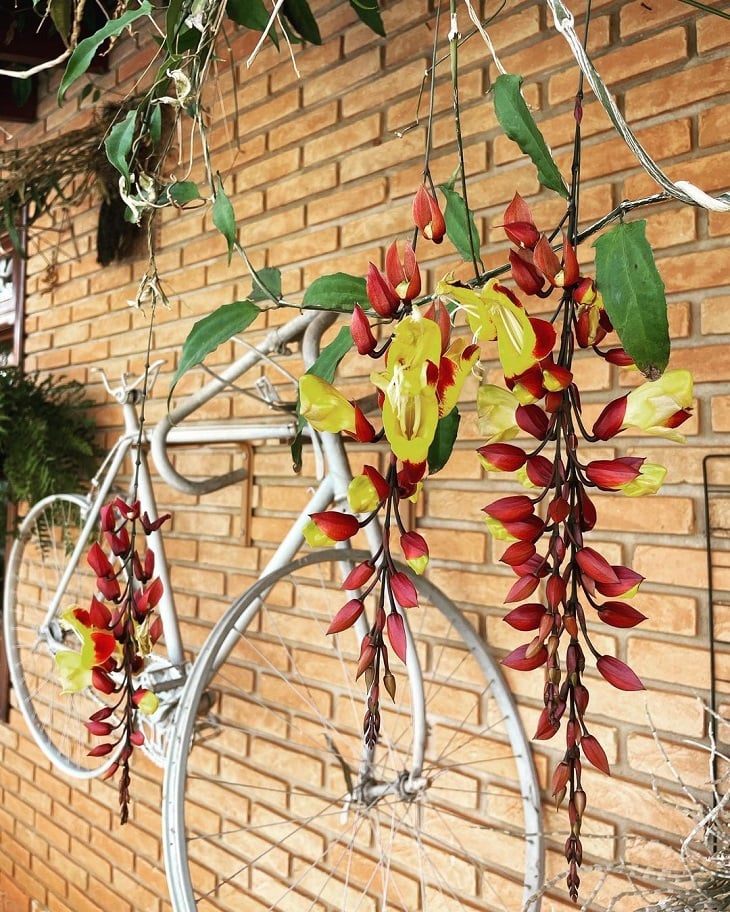
According to the gardener, “the jewish shoe gets its name due to the shape of its flowers, which look like a small female shoe”. The dark green tone of the leaves also collaborates to generate the visual effect.
Is Jellyfish a poisonous plant?
Despite bringing color and a lot of joy to the environments, the species is considered toxic, so some care must be taken during cultivation. According to the expert, “the plant should not be kept near children and pets”.
Jelly shoes x jade creeper
The Jellyfish and the jade vine are very similar in terms of the appearance of the flowers, however, they are different species. While the jean slipper belongs to the family acanthaceae and native to India, jade belongs to the family Fabaceae and originally from the Philippines.
How to care for the jean shoes
The Jellyfish is a medium-sized, fast-growing vine, which can reach up to 6 m in height. However, you need to pay attention to cultivation to be successful. Below, check out valuable tips from the gardener:
1. Irrigation
According to the specialist, watering should be moderate, “only done when the substrate is dry. Therefore, the tip is always to observe the plant”. The species also does not like very wet soil.
2. Fertilization
Fertilizer is an essential component for the plant, as it guarantees adequate nutrients for a long-lasting and vigorous flowering. Kremer recommends the use of industrialized fertilizer NPK 4.14.8, specific for flowering species.
3. Brightness
Like most vines, the Jellyfish likes places with good light and full sun. According to the specialist, it can also be grown in partial shade. For this type of environment, the plant should receive at least 4 to 6 hours of sunlight a day.
4. ideal soil
“The vine appreciates a fertile soil rich in organic matter”, he begins. For this, Kremer recommends a well-draining substrate, as the plant does not tolerate waterlogged roots. For pot cultivation, the tip is to use bidim blanket, shards of tiles or pebbles.
5. Pruning
This plant does not need pruning, but many people do to encourage its growth. According to manta bidim, “pruning can be done once a year, right after flowering”. The gardener emphasizes that it is necessary to use clean and sterilized equipment to avoid the presence of diseases and pests.
6. Seedlings
The species multiplies by cuttings, that is, a technique that uses the branches of the plant. To be successful in this type of cultivation, the branches need to be planted in a drainable substrate rich in organic matter.
7. Flowering
According to Kremer, flowering takes place in the spring and summer seasons, and can extend into autumn. It is in this period that the plant presents greener leaves, fast growth and showy flowers. In addition, the species attracts insects and birds at this time, such as hummingbirds.
8. Plant growth
To ensure that your vine develops healthily and has beautiful flowers, Kremer points out that “the flower needs to be grown in places with good light, be in nutrient-rich soil and receive quality fertilizer at least 4 times a year”.
Finally, the Jellyfish likes warmer places, so be patient with the plant if you live in a colder region. In these cases, the tip is to ensure good light and to improve fertilization throughout the year.
Learn more about the jewish shoe
In addition to all the previous tips, you can also check out more information about the jean slipper in the videos below. The selection brings practical tips on seedling cultivation and production, as well as curiosities:
More jean slipper growing tips
In this video, gardener Flávia Kremer brings other guidelines to succeed in growing the plant. Here, you can learn a little more about the life cycle of the species, curiosities and tips on fertilization and irrigation. The specialist also teaches how to make seedlings to ensure the flower propagation in a practical way.
Step by step to make creeper seedlings
Cutting is the most practical way to make seedlings and in this video you learn the step by step of this technique. The video teaches how to choose the branches and also shares ideas for planting, showing the perfect substrate to generate new seedlings. This video is interesting, especially if you want to make your garden even more flowery.
More facts about the species
Did you know that the plant can produce bunches of flowers over 1 m long? Here, you can follow this and other curiosities that make the creeper so interesting and ornamental. The content also brings tips to use the plant in the decoration in a cheerful and sophisticated way.
Now it’s easy to grow the Jewish shoe, isn’t it? Now follow the next topic and get inspired by decorating ideas that use all the charm of the plant to beautify the space.
10 photos that took advantage of the charm of the Jewish shoe in the decoration
Finally, to prove the potency of the jean slipper, check out inspirations for using the flower in decoration. It looks great in pergolas, hedges and planters:
1. The shape of the flowers on the Jewish slipper enchants
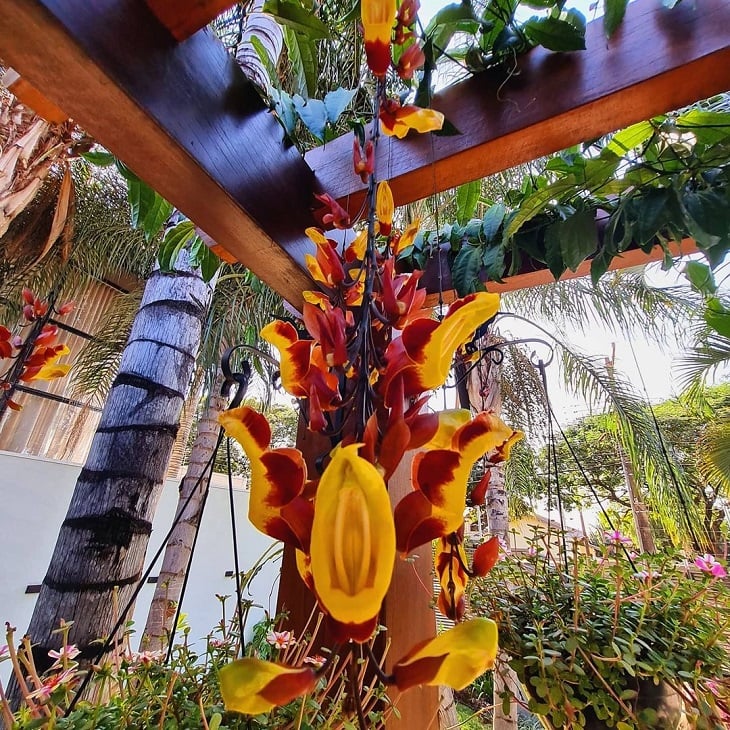
2. The vine has vivid and intense colors that bring charm to the environments
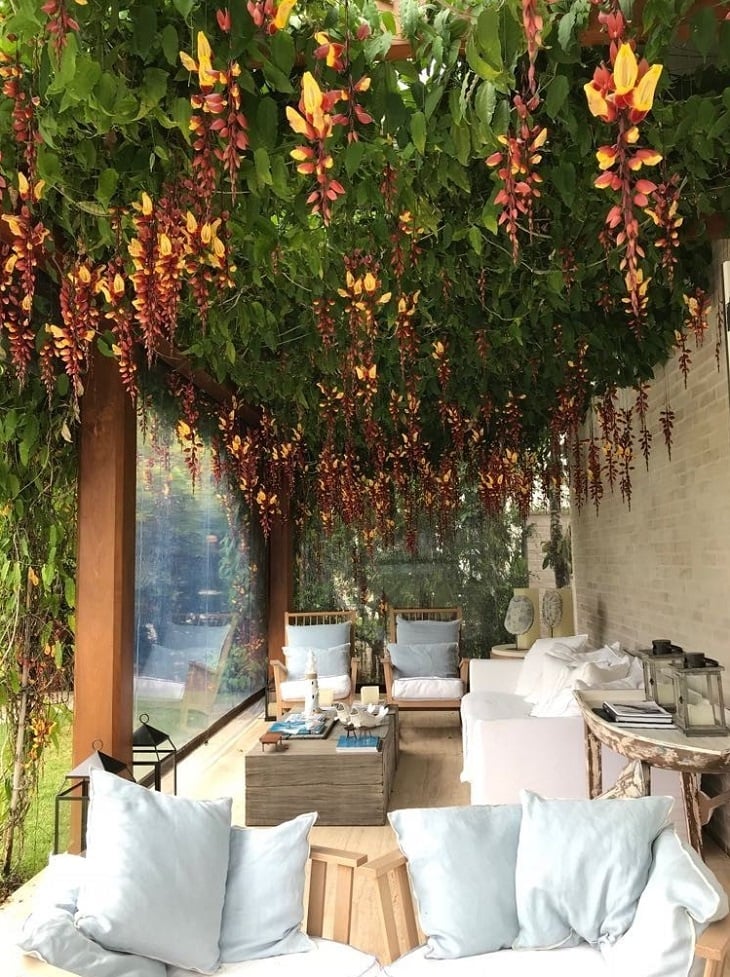
3. The plant is perfect for outdoor areas
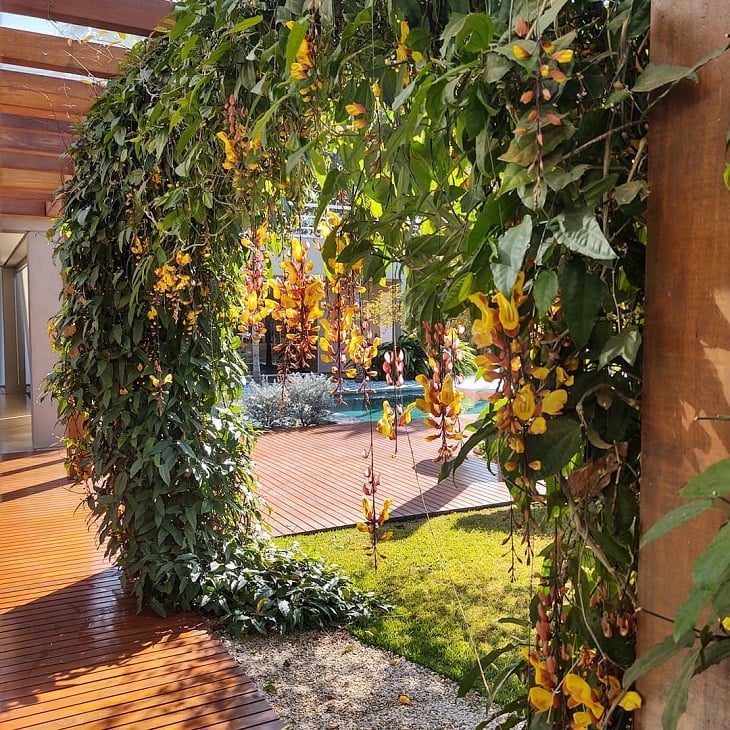
4. And with its great ornamental value
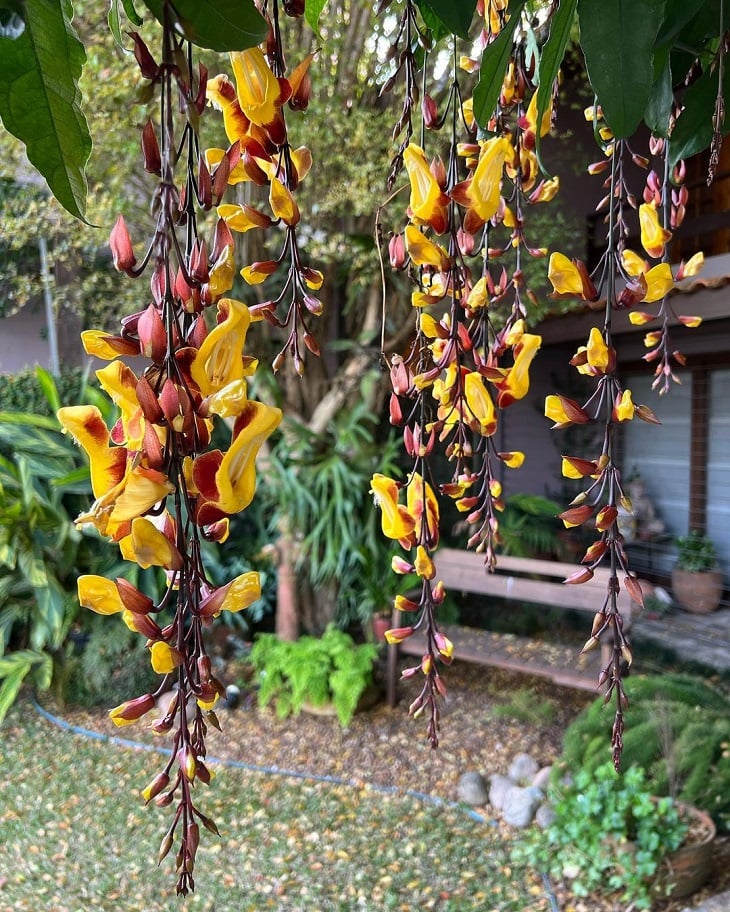
5. It’s easy to create a happy and relaxed corner at home
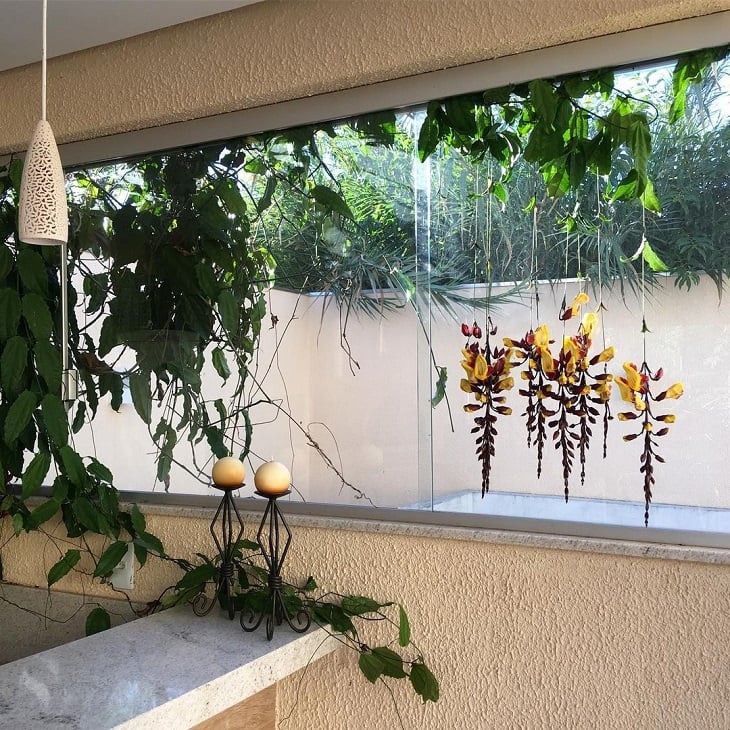
6. In decoration, the flower guarantees a modern and delicate arrangement
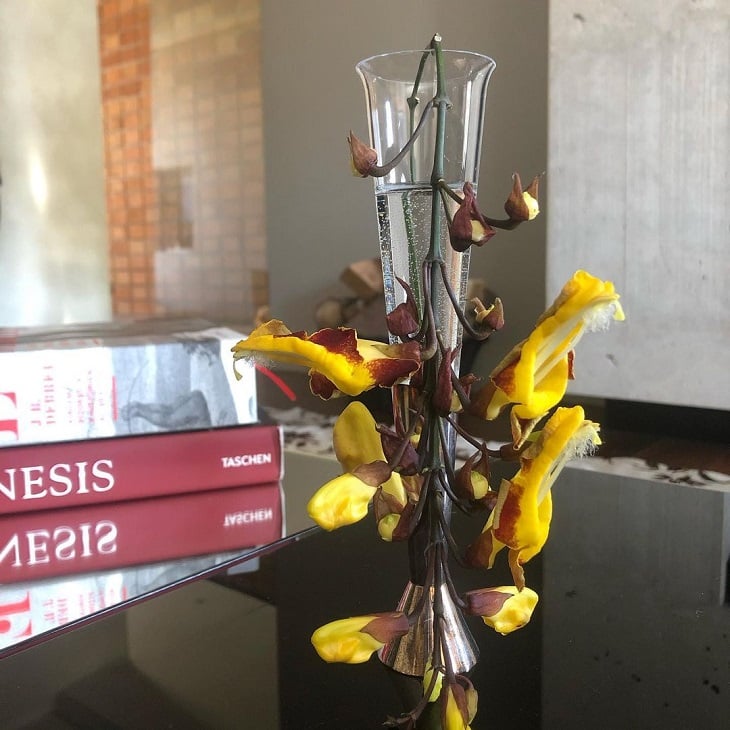
7. Steals the scene if grown on pergolas
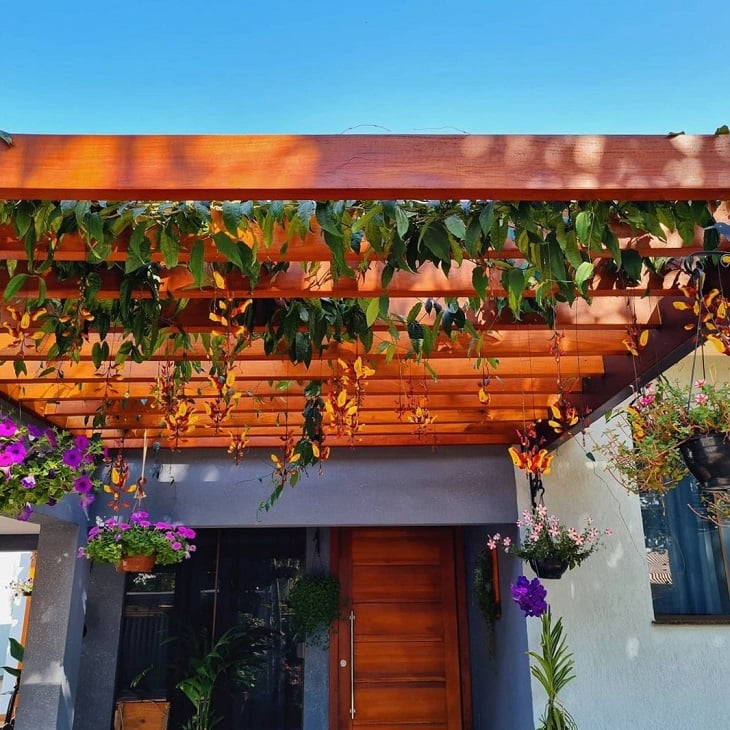
8. As it is pendant, it also gives a beautiful effect on walls and windows.
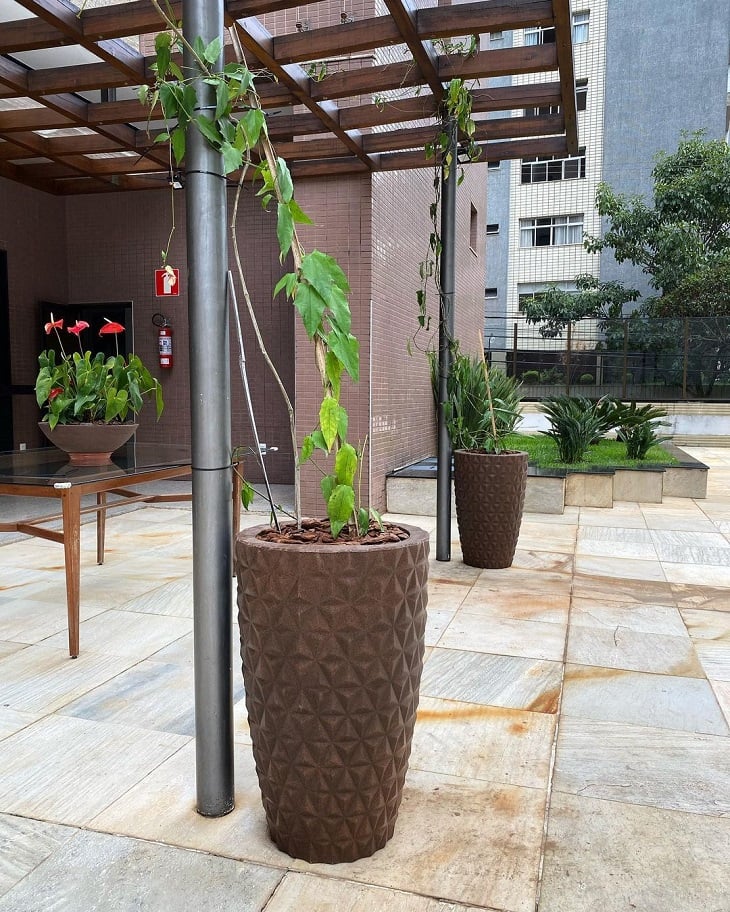
9. If you prefer, you can also grow it in pots
10. Undoubtedly, your home will be much happier with the presence of this beautiful creeper
Fell in love, didn’t you? The jean slipper will bring a cheerful and lively look to your home. To make your corner even more colorful, bet on the cultivation of geraniums, after all, the species blooms all year round!