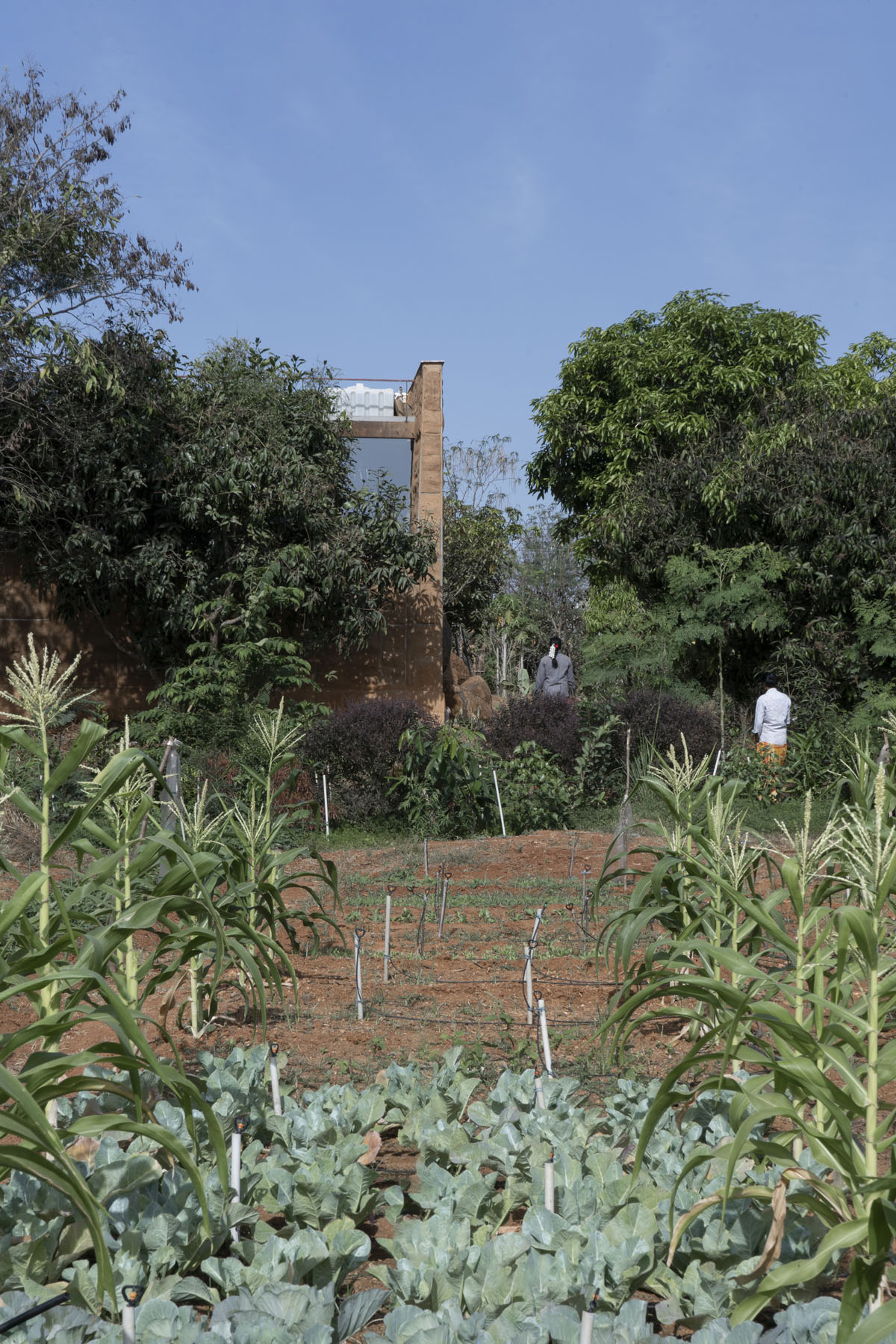
Sympathetically designed to blend into the pristine landscape, the Flintstone6 project features debris wall construction. Using materials from the site, such as soil and waste, it was possible to complete construction despite the supply limits of the COVID-19 pandemic. The layout of the house of 180 square meters was created by Mitte Architects For Mr. Abhishek Upali and Ms. Sunaina. The owners chose to purchase a farm in Sanctity Ferme after ongoing lockdowns caused concern about the future of their urban situation. On the outskirts of Bangalore, in Kodiga Timmanapalli, Tamil Nadu, India, this farming community promotes a connection to nature, organic farming, and sustainable housing.
 Shulagiri Hills is appreciated for its rustic charm and tranquility. It provides the perfect setting for a peaceful retreat away from urban stresses.
The Flintstone6 home honors a pristine valley setting with the site’s sustainable architecture, which combines earthy and modern elements.
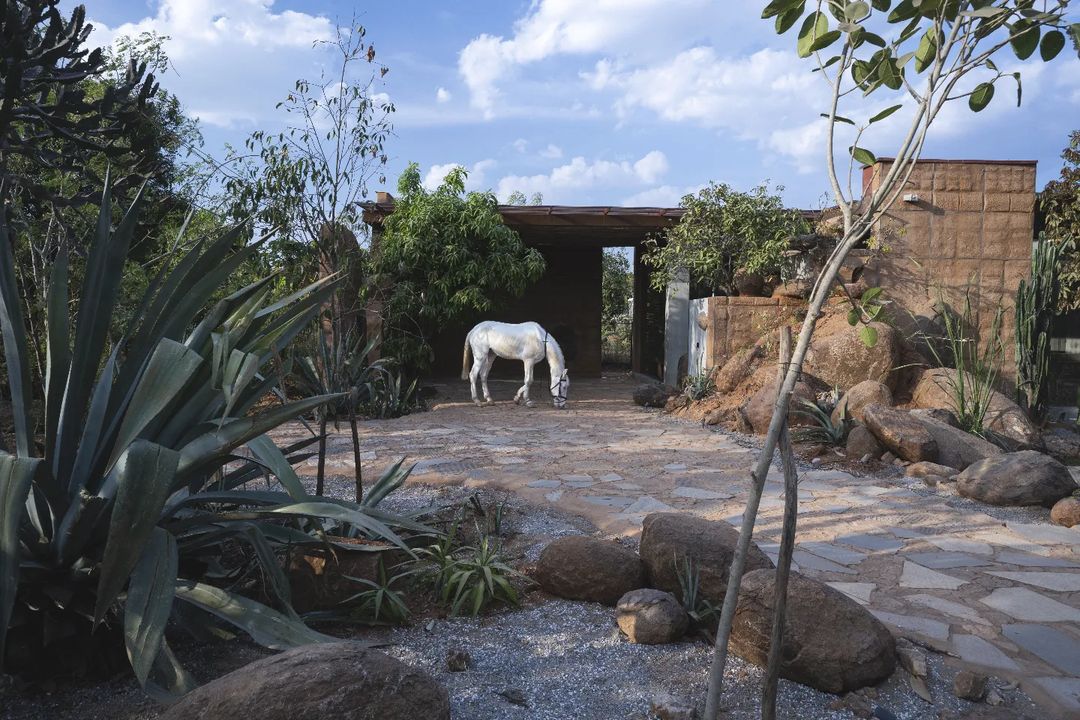
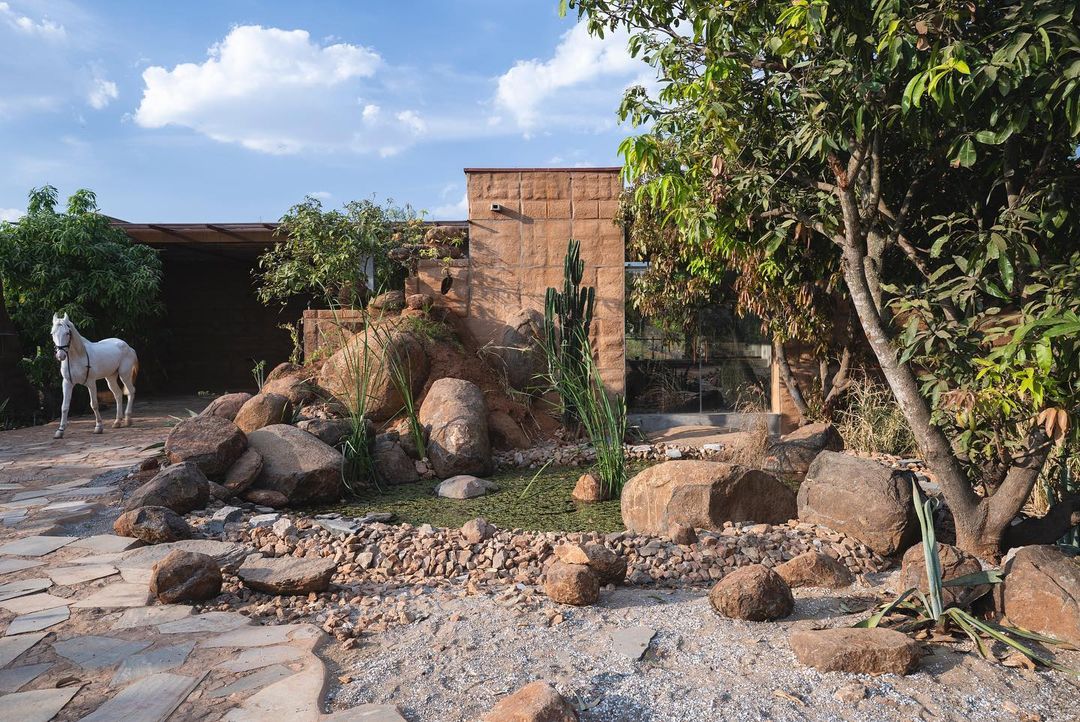
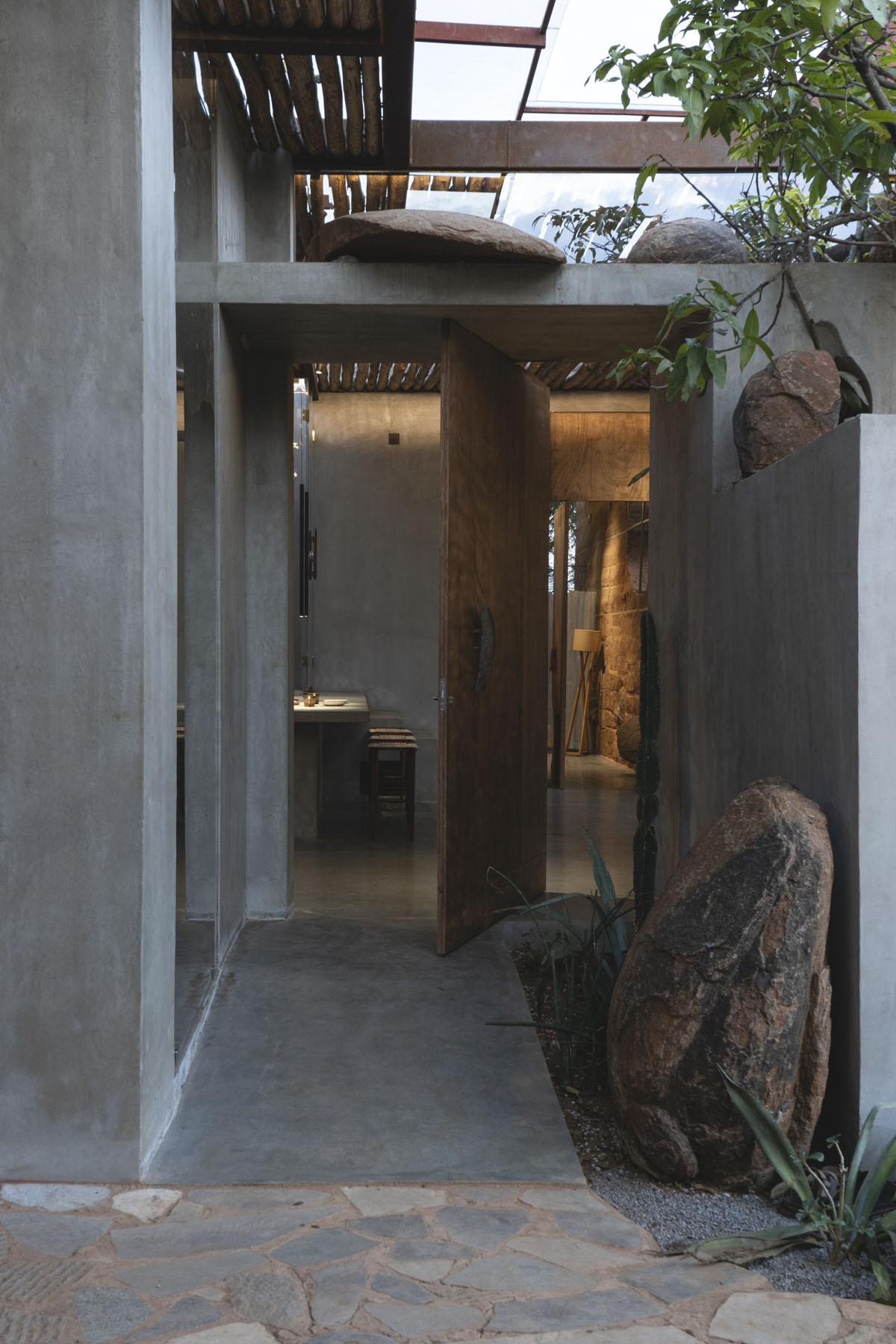
Stone walkways and mighty boulders make up the rustic landscape around the house, which blends with the natural environment. Shrubs and trees grow around the rocky terrain to cultivate a vibrant essence.
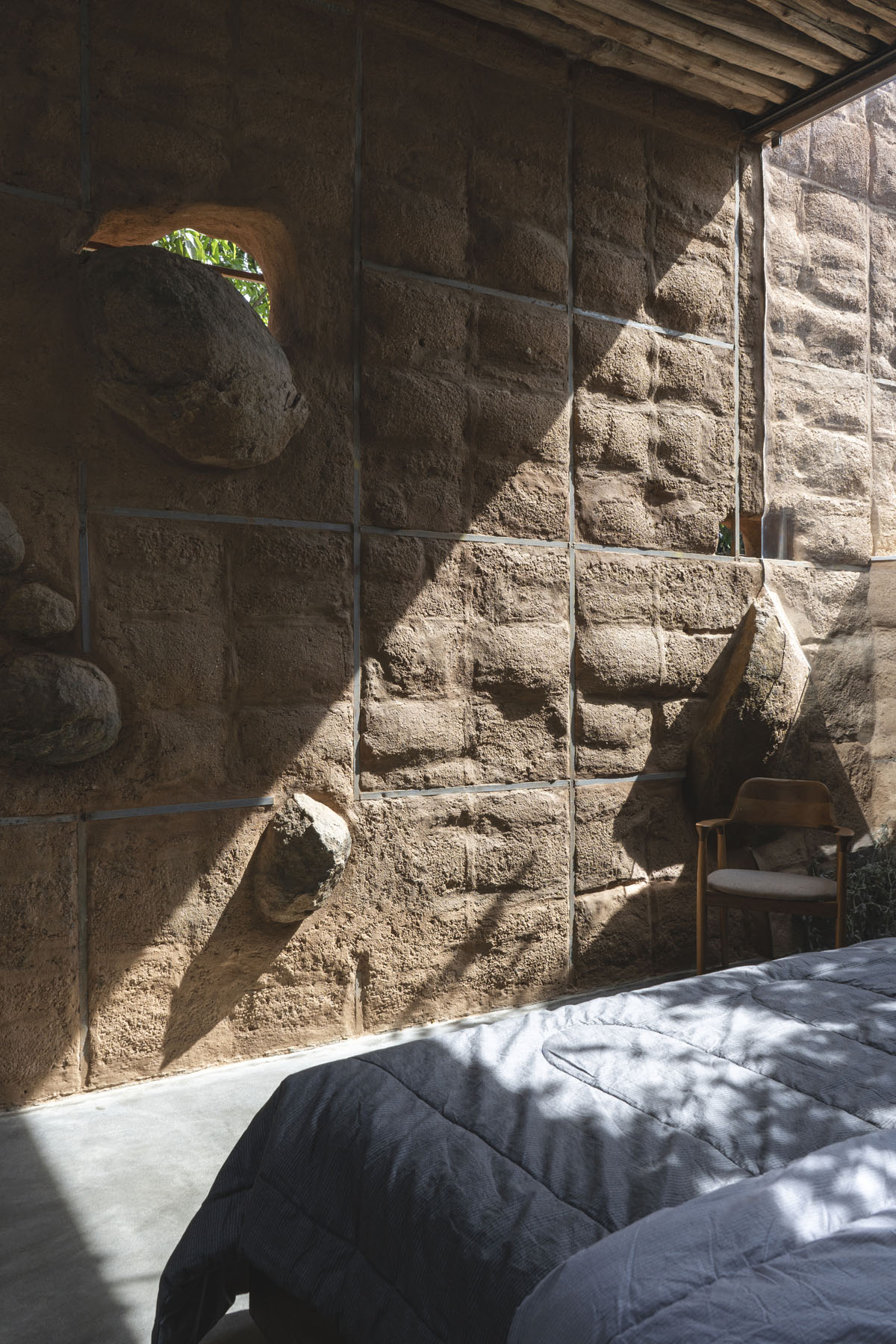
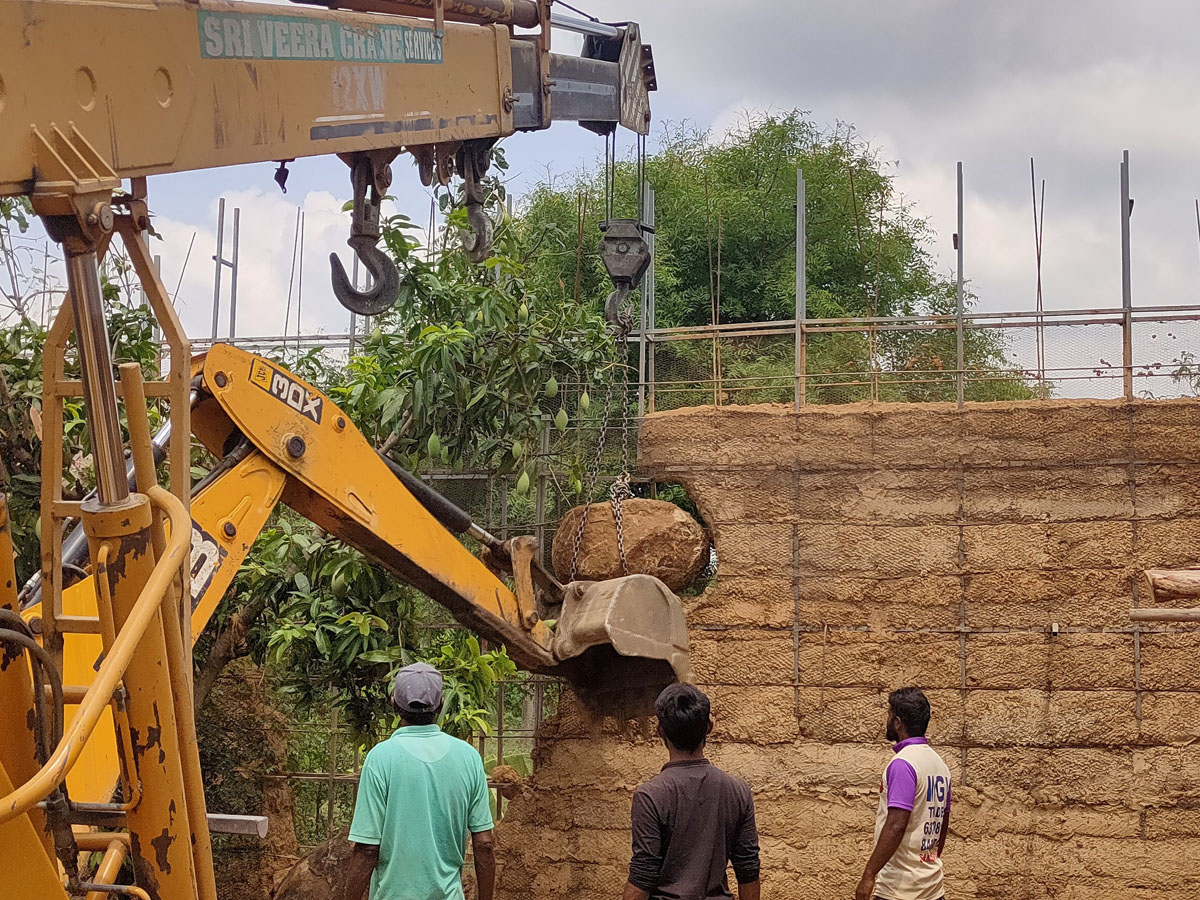
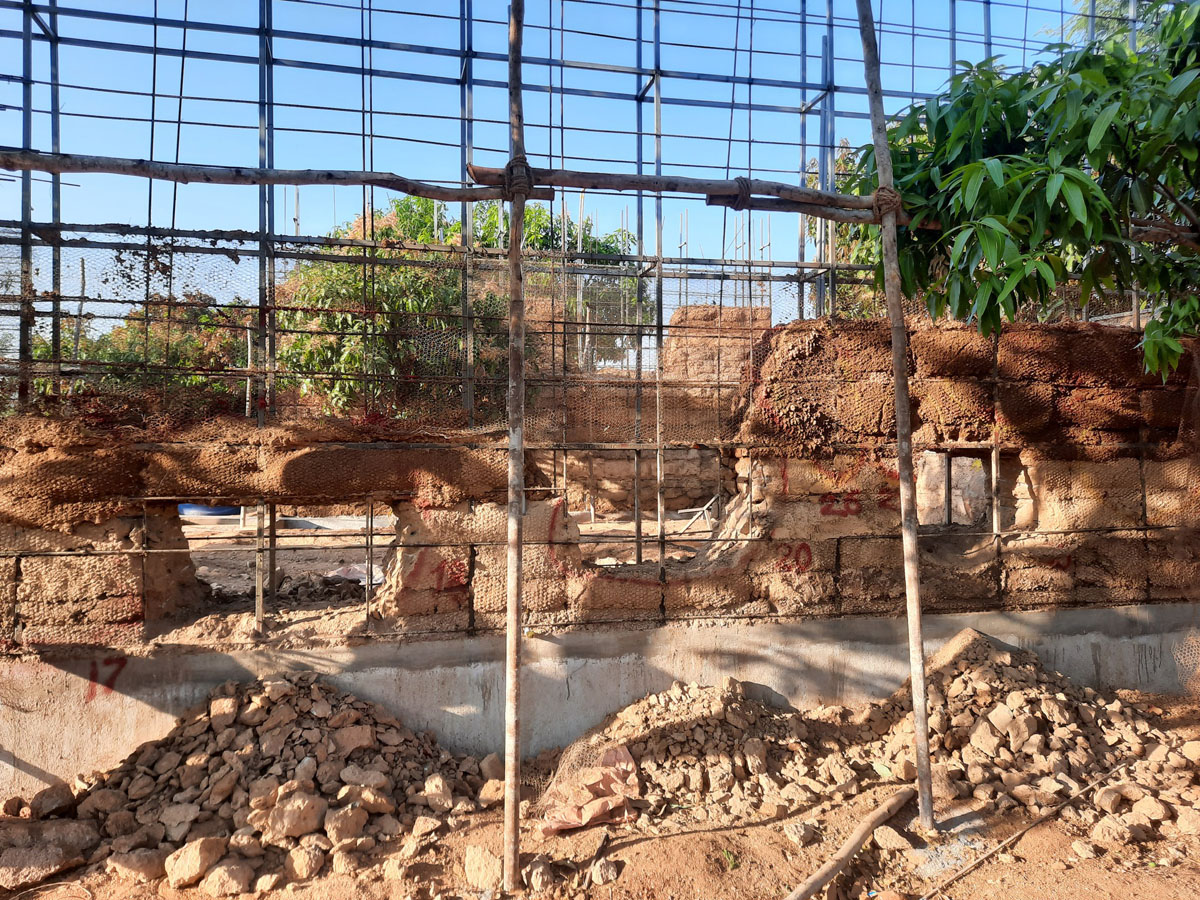
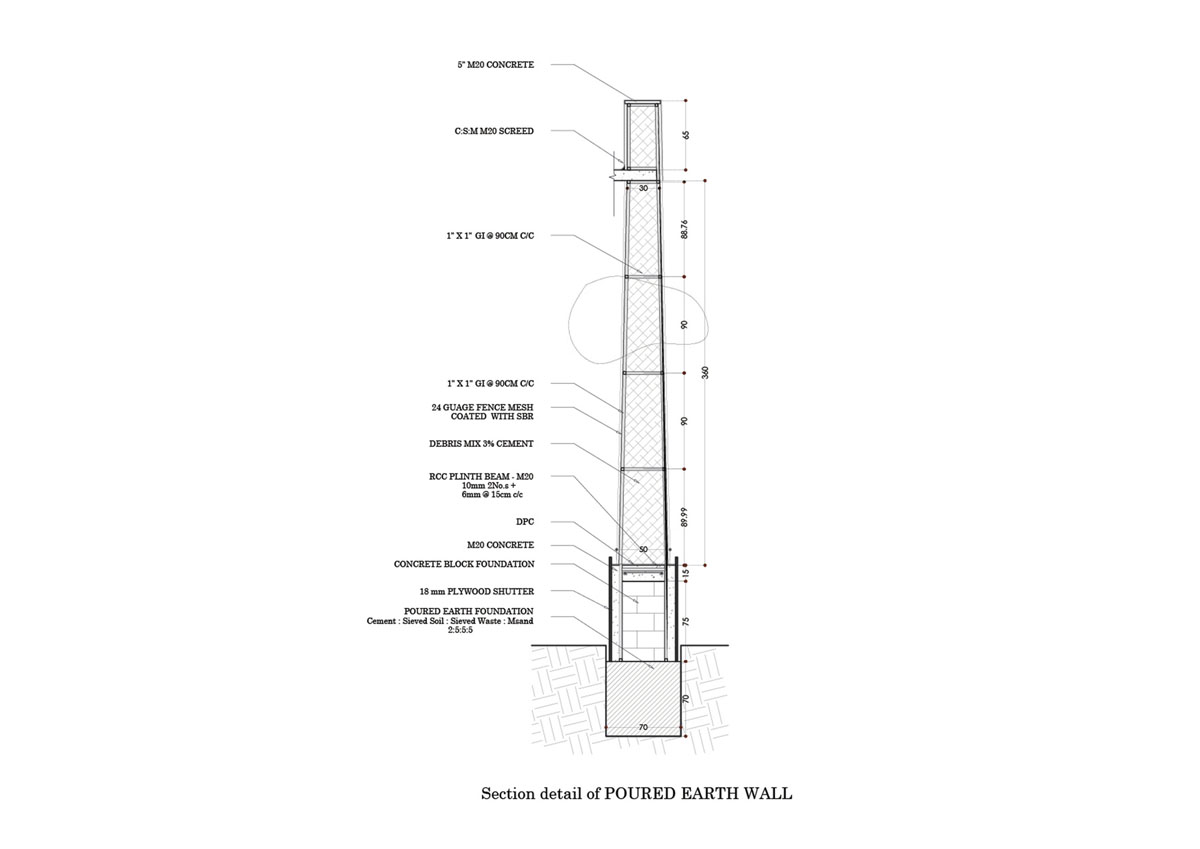
The local ecosystem provided the materials to build this unique home design. The soil of the Shulagiri Valley itself, and the waste from the construction site went into the construction of the poured earthen walls. It was imperative that the building comply with the responsible practices of the permaculture community.
The two-bedroom double-storey cottage is rooted in the surrounding mango grove. Molded earthen walls stand juxtaposed with raw gray concrete counterparts to create a modern juxtaposition.
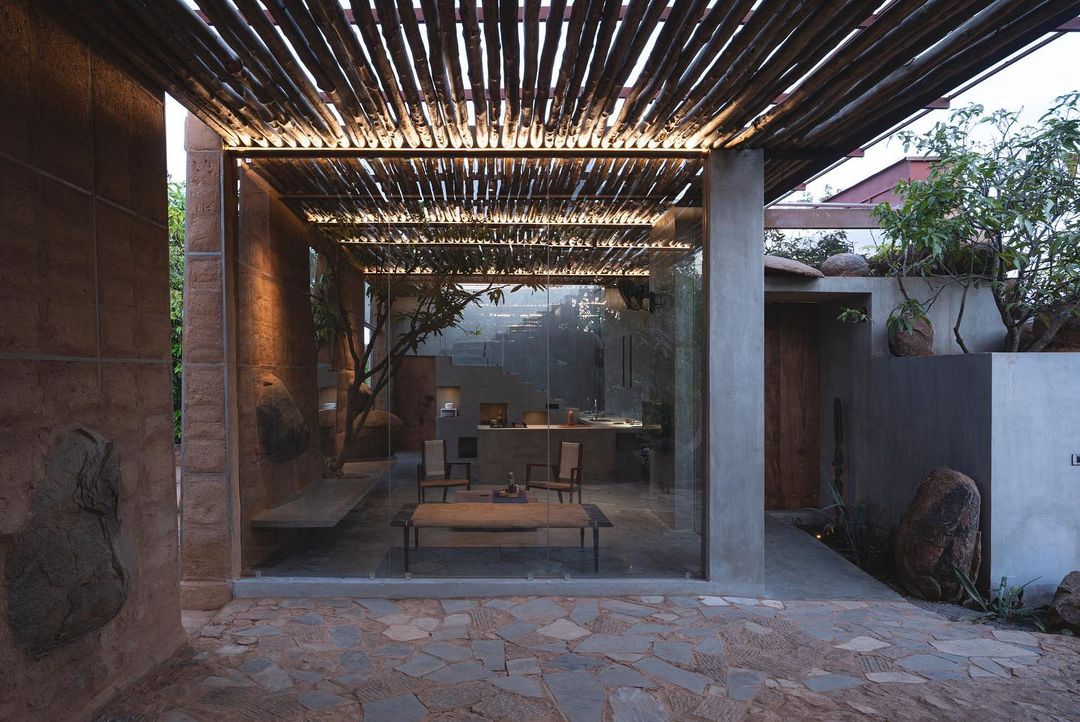
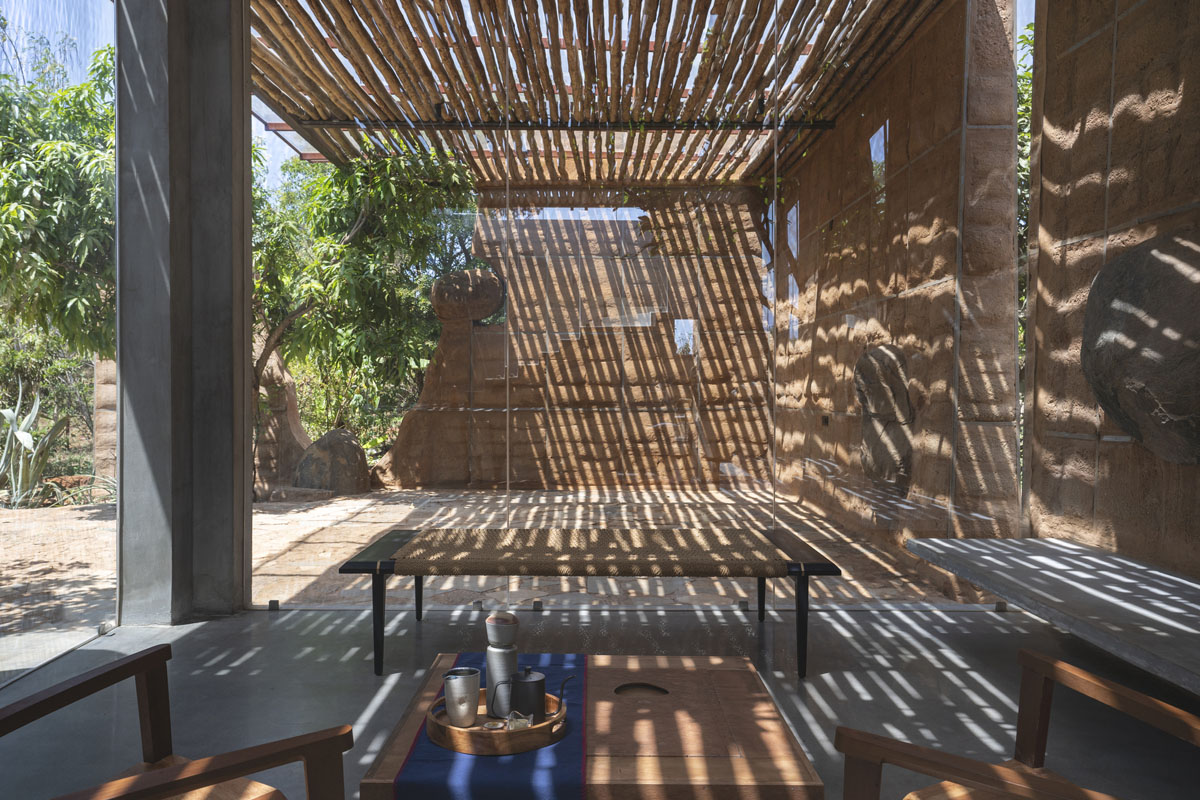
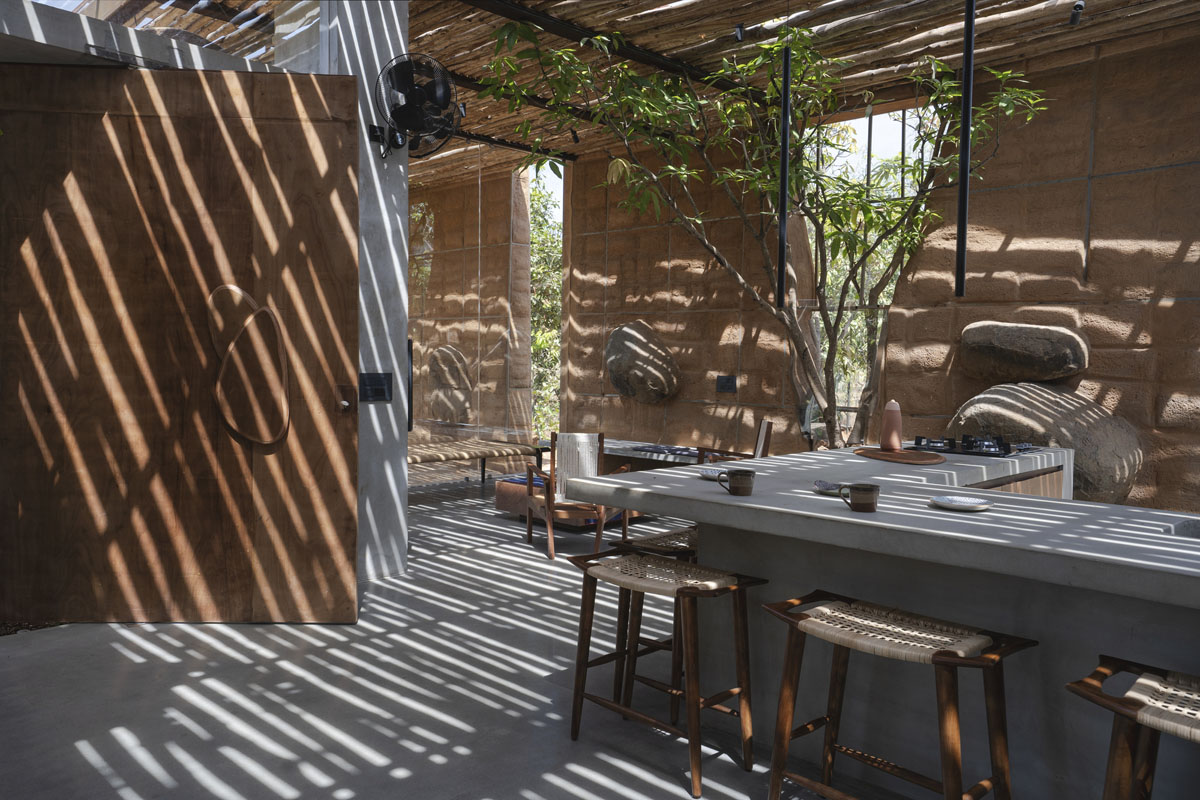
The glass walls accept the influx of natural sunlight, which is filtered through the pergola roof. Glazed surrounds give the interior spaces a fresh outdoor feel.
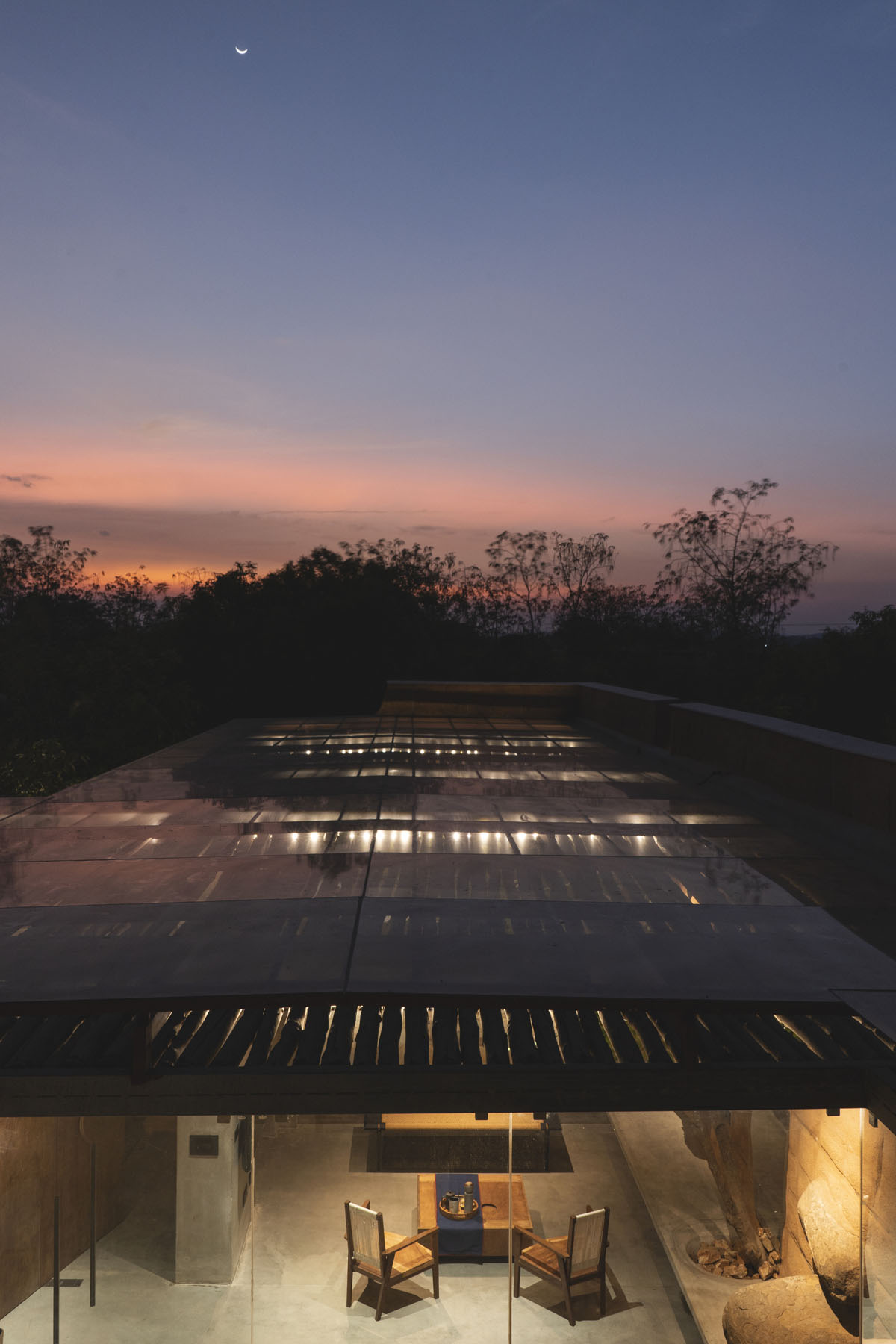
Casuarina glass composite ceiling impregnates a kaleidoscopic view of the sky.
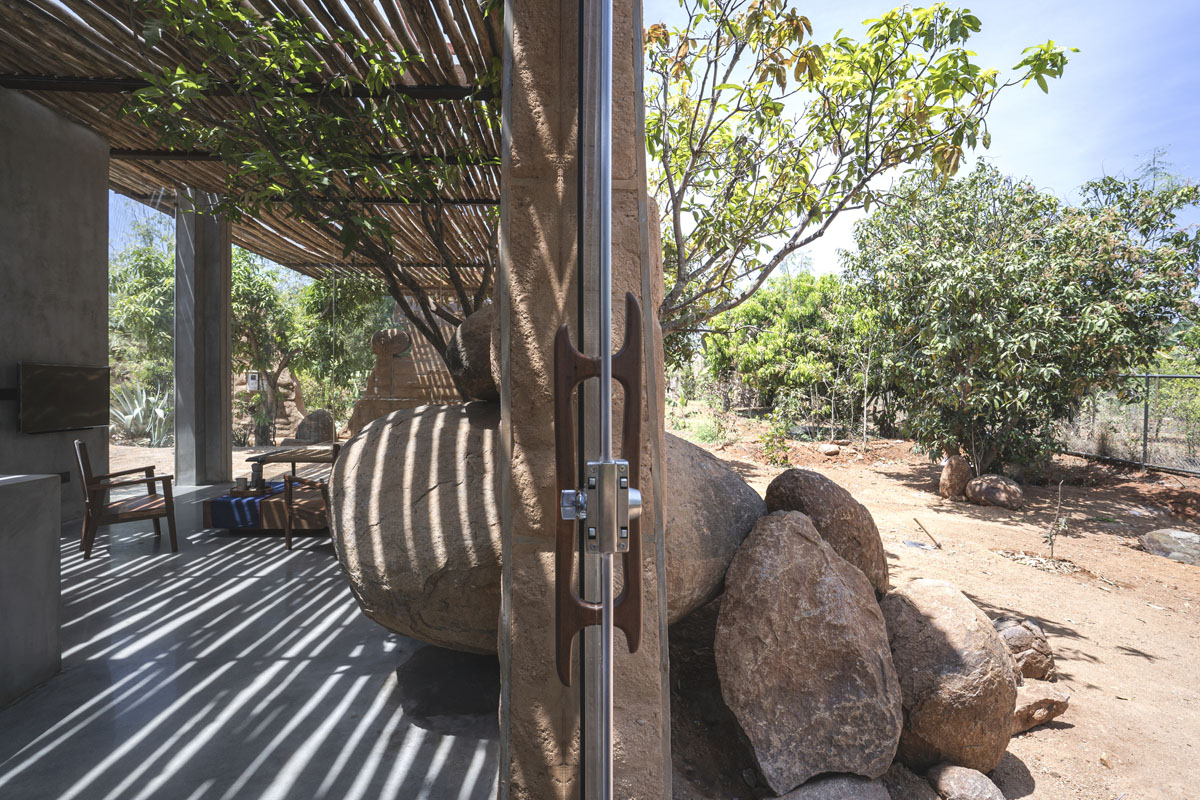
Glass doors retract to connect the indoor and outdoor living spaces. Trees are placed inside the house to maintain the continuous flow of nature.
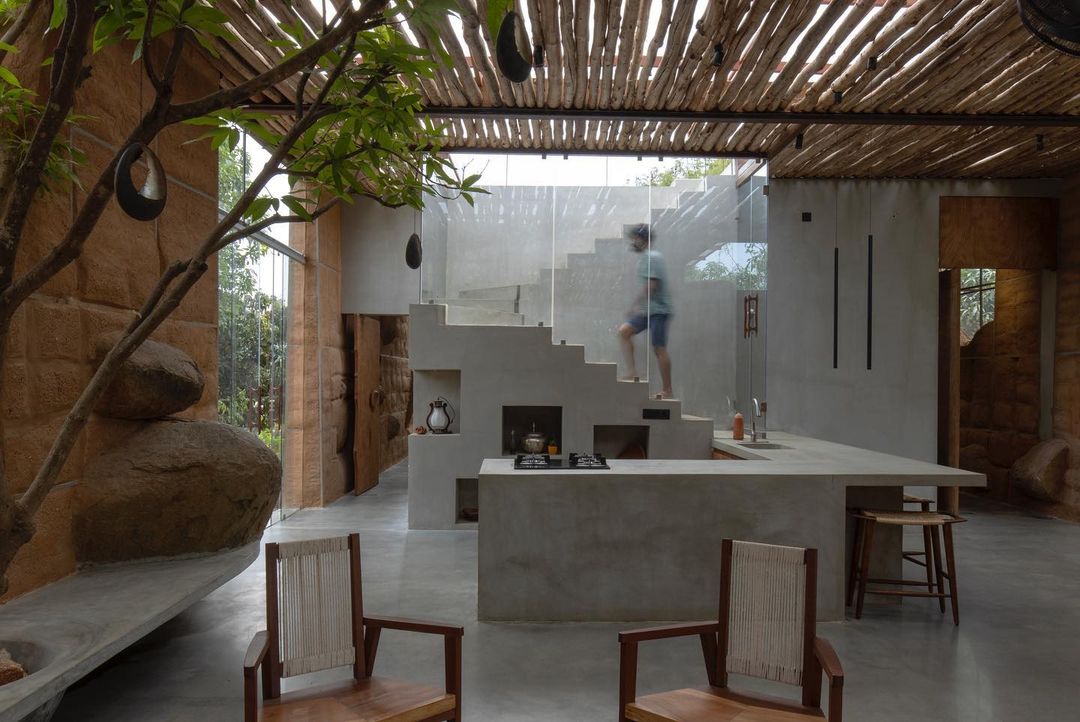
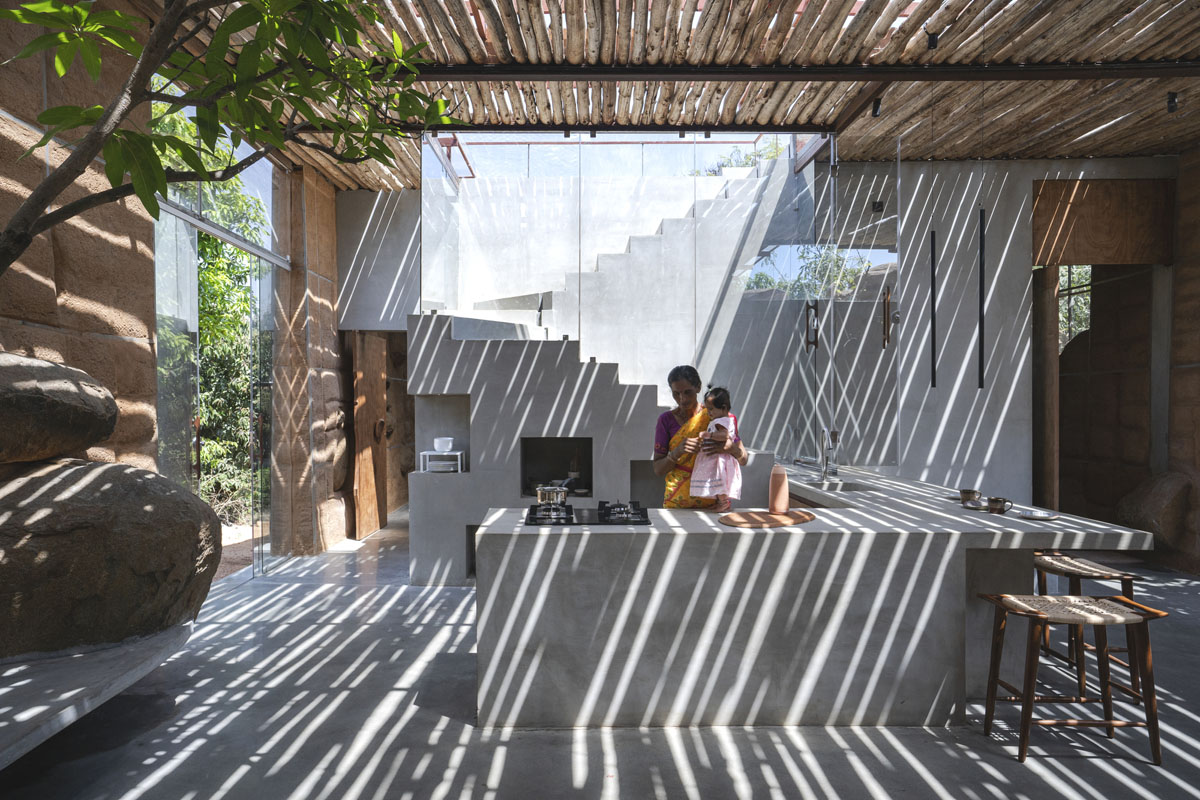
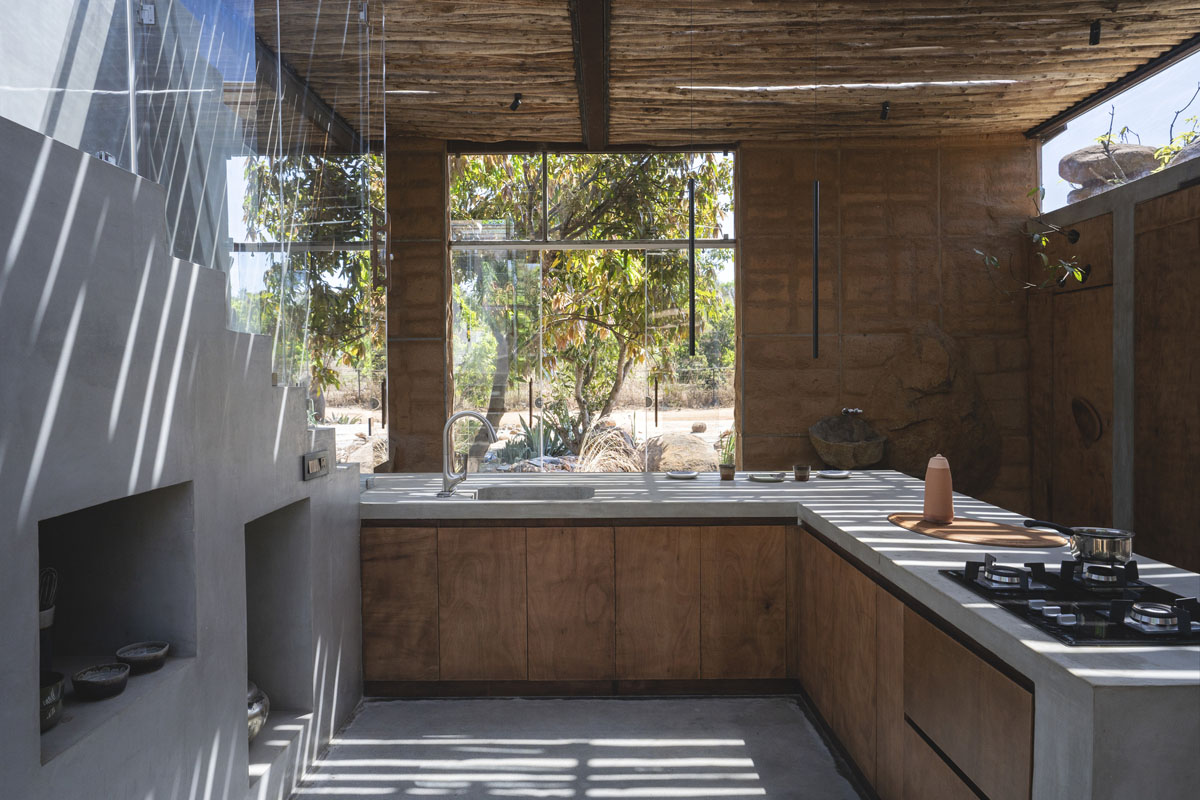
The multifunctional living space features an open plan kitchen design, built on site with concrete. The concrete worktop spills out in a complete envelope around the kitchen peninsula.
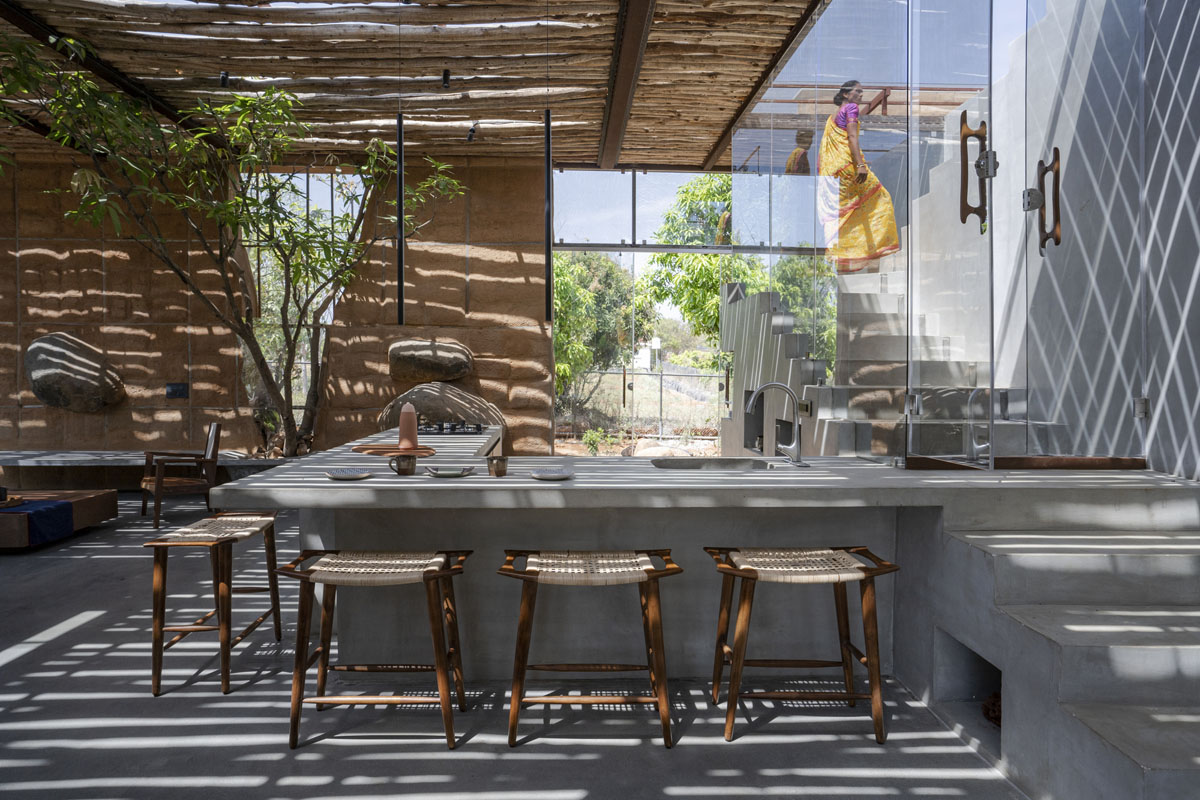
Three wooden bar stools line the edge of the custom-made concrete kitchen peninsula to form a cozy breakfast bar. The concrete screed covers the floor to achieve a cohesive material board.
A play of light from the Casuarina ceiling covers the kitchen, creating a dynamic decor scheme. Beams of bar light on the floor, concrete vaults and earthen walls.
She climbs the base of the concrete stairs right next to the kitchen bar stools. A staircase leads to the Casuarina-ferrocement composite roof, which serves as a banqueting porch. This addition was made in place of the visually blocked upper floor, which would have affected the neighbors’ view of the farm.
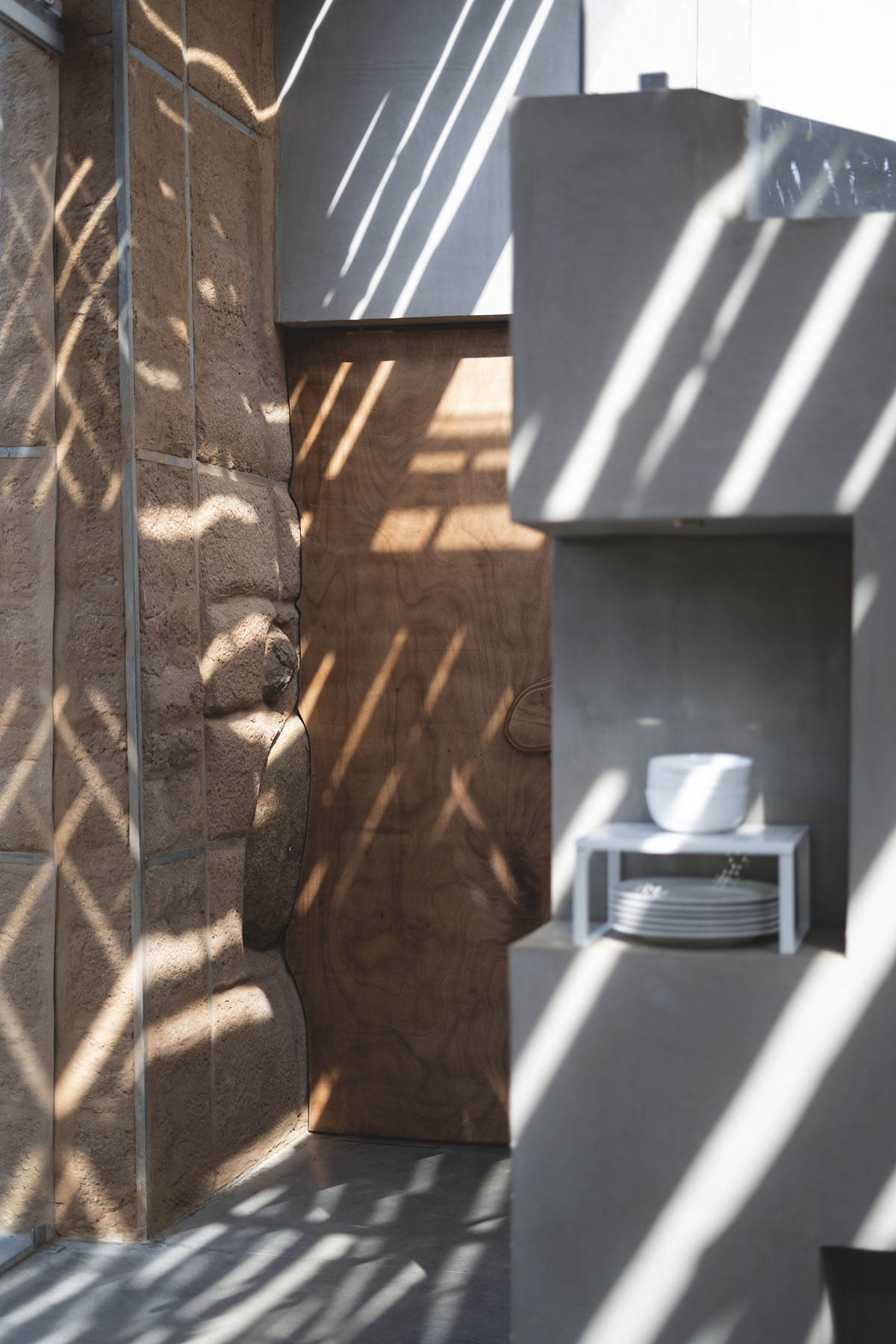
The corners of the shelves are formed at the base of the concrete staircase design. Smooth grooves store plates and bowls neatly displayed.
Wood cabinet doors add visual warmth to the L-shaped kitchen peninsula. The kitchen layout creates a sociable environment for the chef, allowing them to look out over the rest of the living space at all times.
The entrance is served by a stone wash basin.
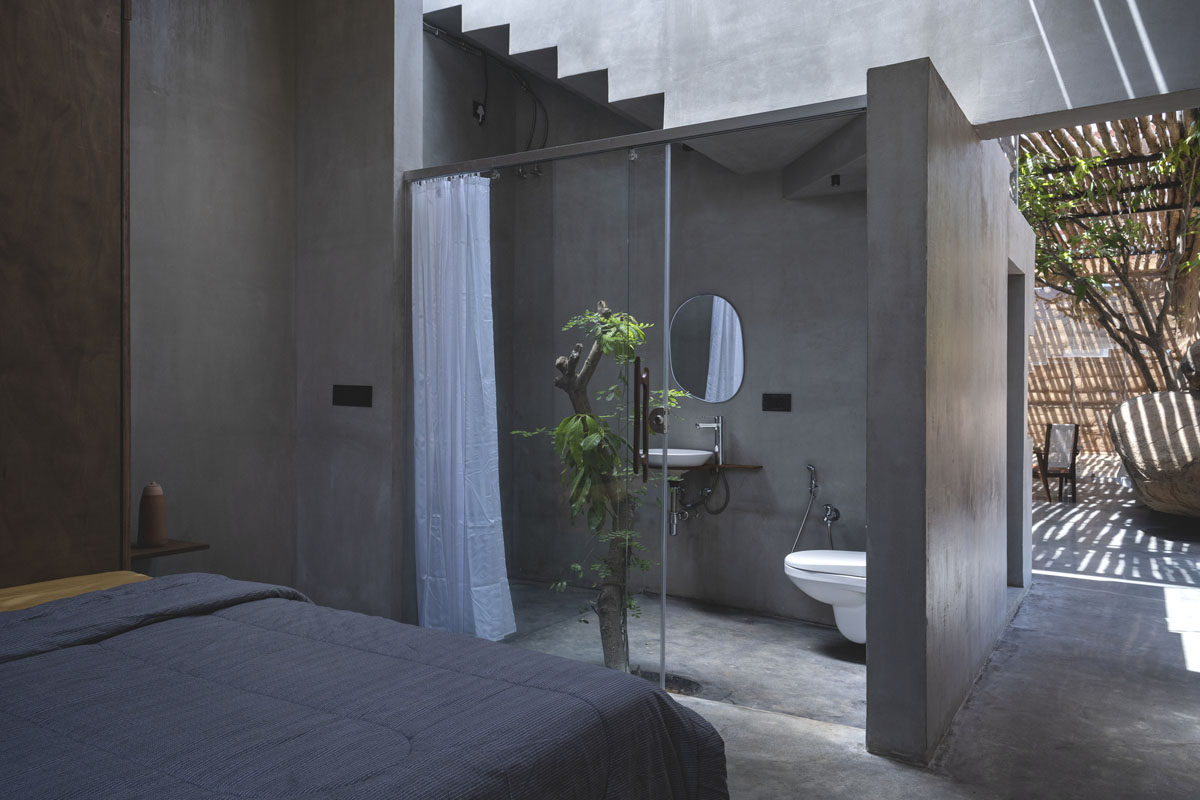
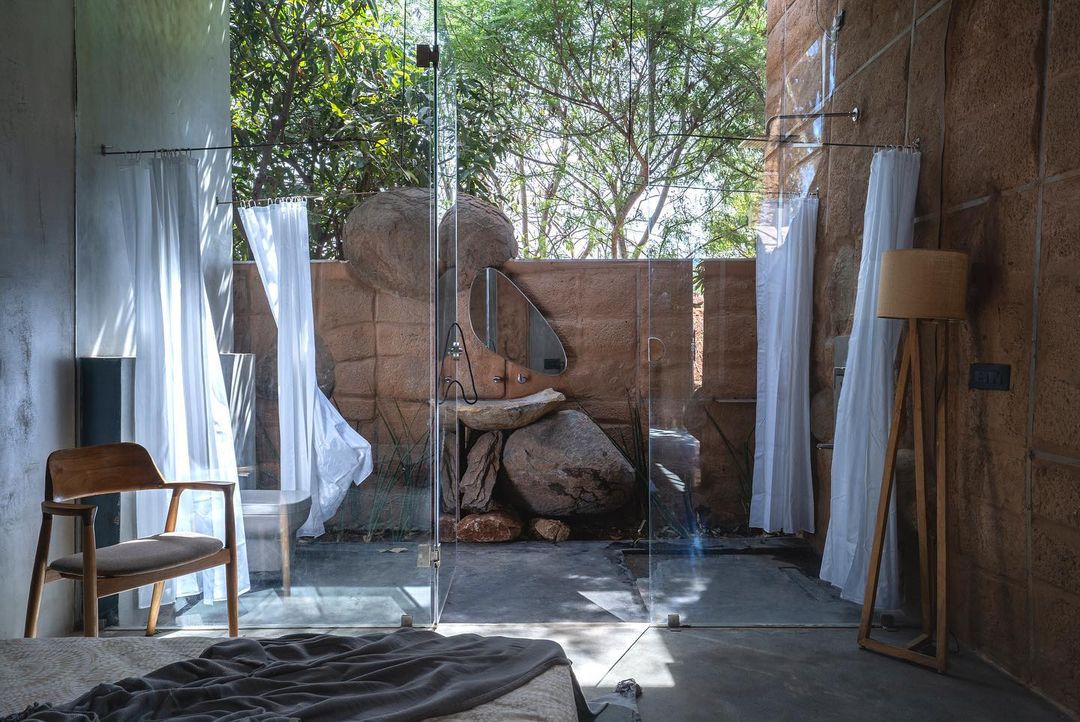
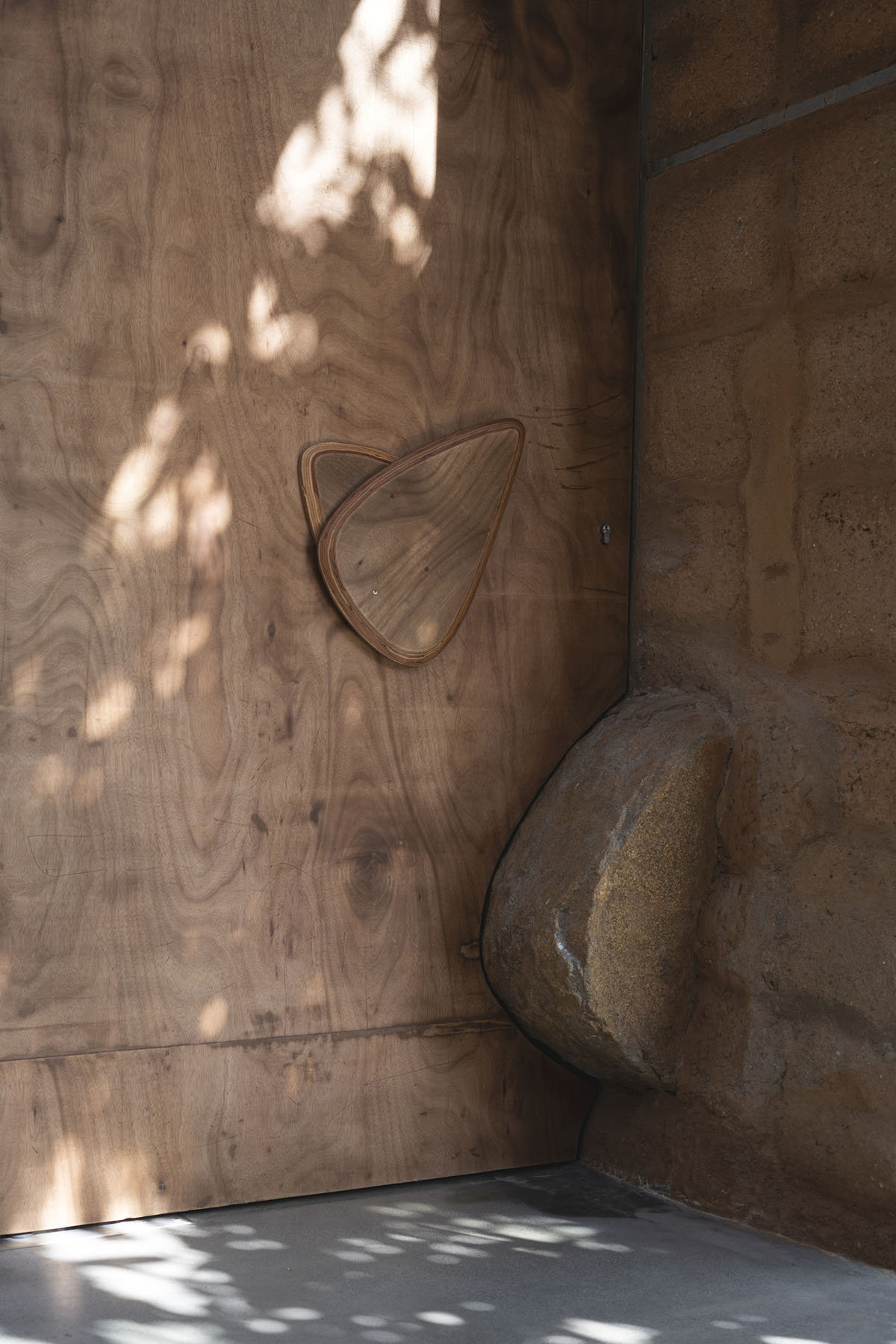
The glass ensuite bathroom makes the bedroom look larger and more airy. A free-form mirror brings a light-reflecting moment to dark gray concrete decor. The small tree brings a touch of color and is associated with nature.
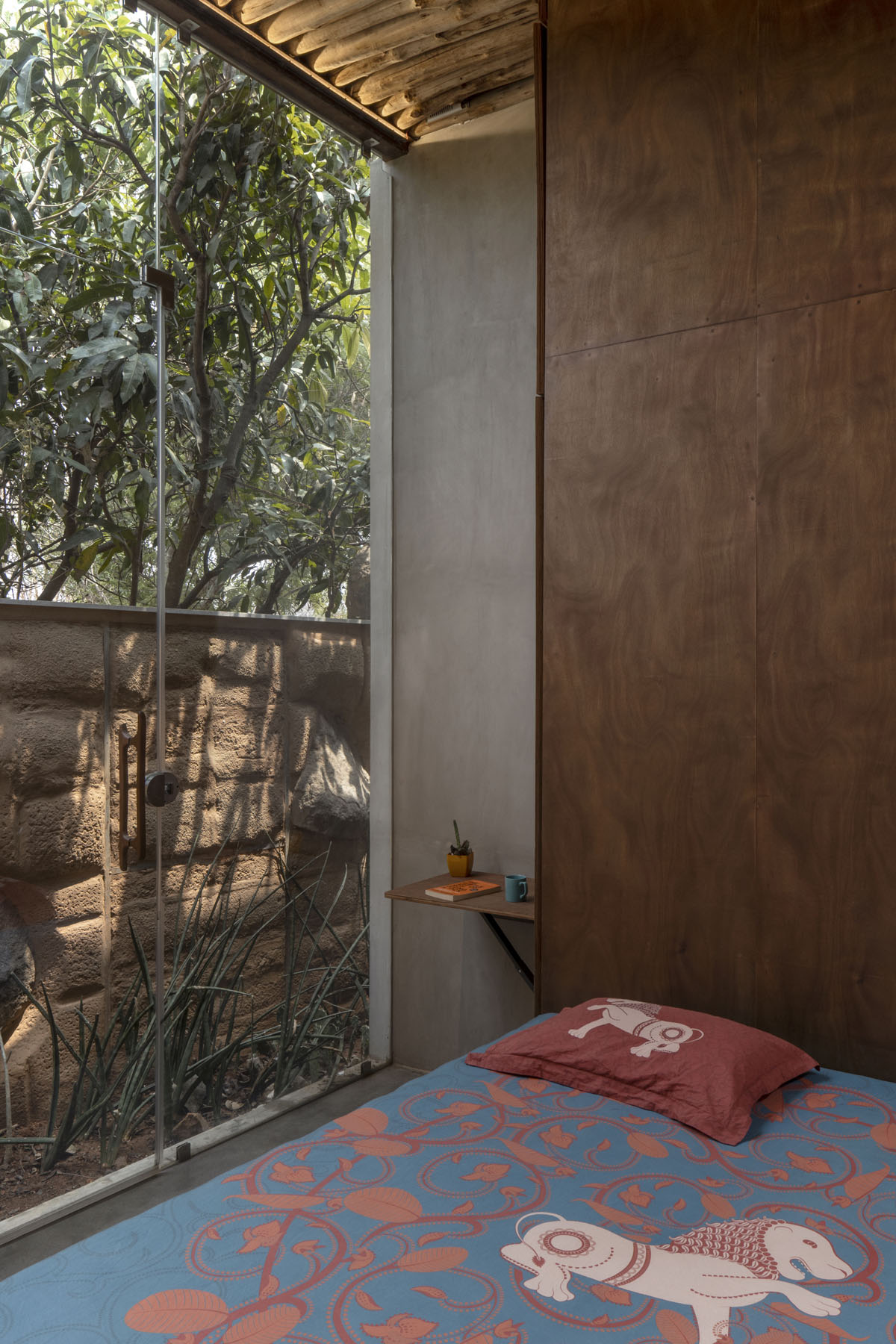
In bedroom one, a rich timber front wall has been built in to reach the full height of the room. Colorful bedspreads add a vibrant touch. A wall-mounted bedside table keeps your floor space clean and spacious.
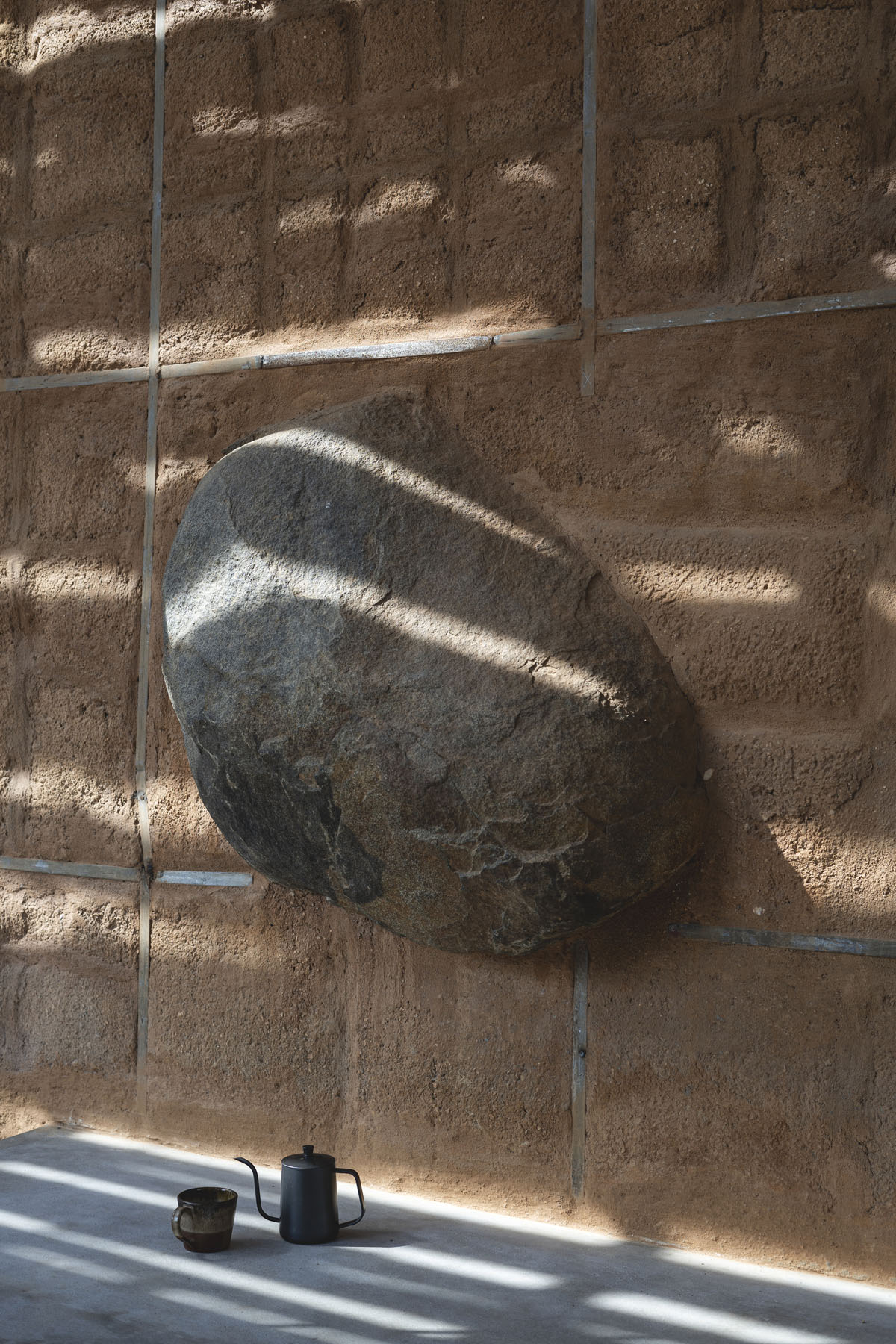
Massive boulders are incorporated into the floor walls to create interesting focal points with strong texture and natural tone.
In the second bedroom design, a frameless glass wall connects the bedroom to the outdoor en-suite bathroom. Privacy curtains drop when needed.
The bathroom sink is carved out of granite rock from a landfill.
Sustainable furniture hewn from reclaimed wood.
The interiors are minimal with simple decor. This deliberate layout allows the impressive wreck walls to come into focus. The ornamental rock was reclaimed from a disused local quarry.
The Flintstone6 Cottage features parallel north-south walls, which aesthetically reflect the Rocky Mountains of the Cauvery Basin region.
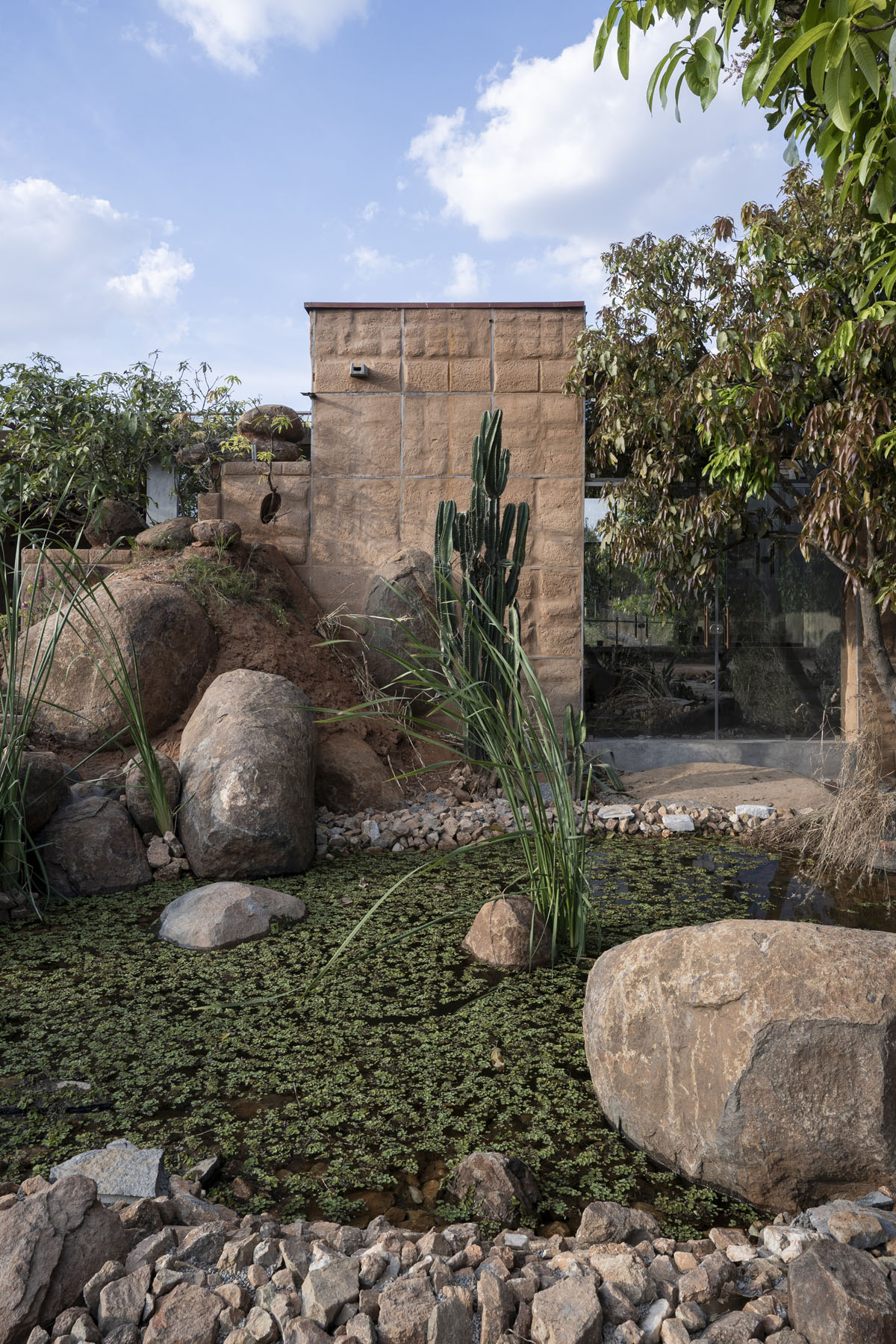
The landscape design includes native cacti. Granite quarry waste makes a sustainable choice for paving. River stones make up a koi pond.
Organic farmland makes a nice complement to sustainable housing.
Decorative boulders were incorporated during the initial stages of debris wall construction.
The building surplus simply returned to the land.
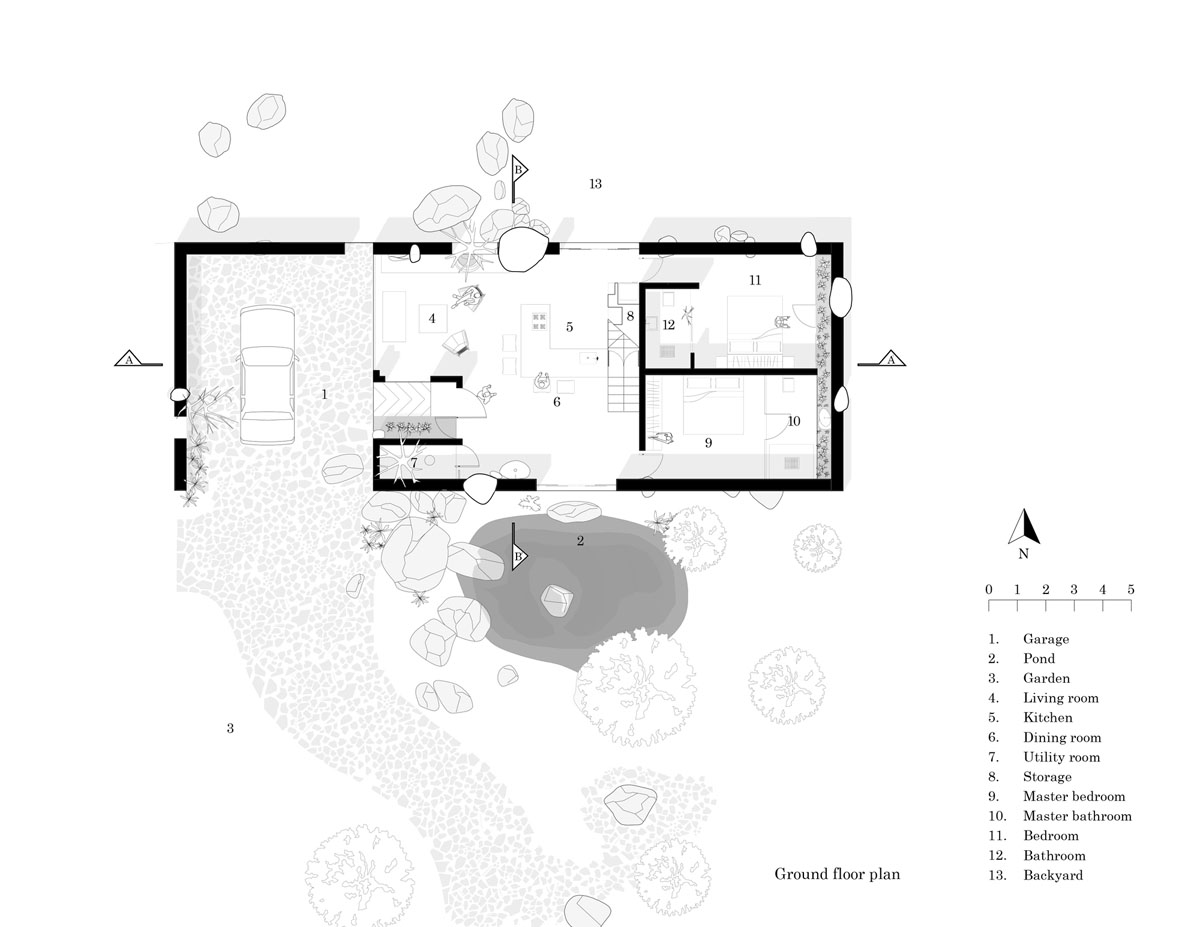
In the ground floor plan we can see the small lounge area along with the large adjoining kitchen layout. A utility room is tucked away in the corner of the living space, just off the front entrance.
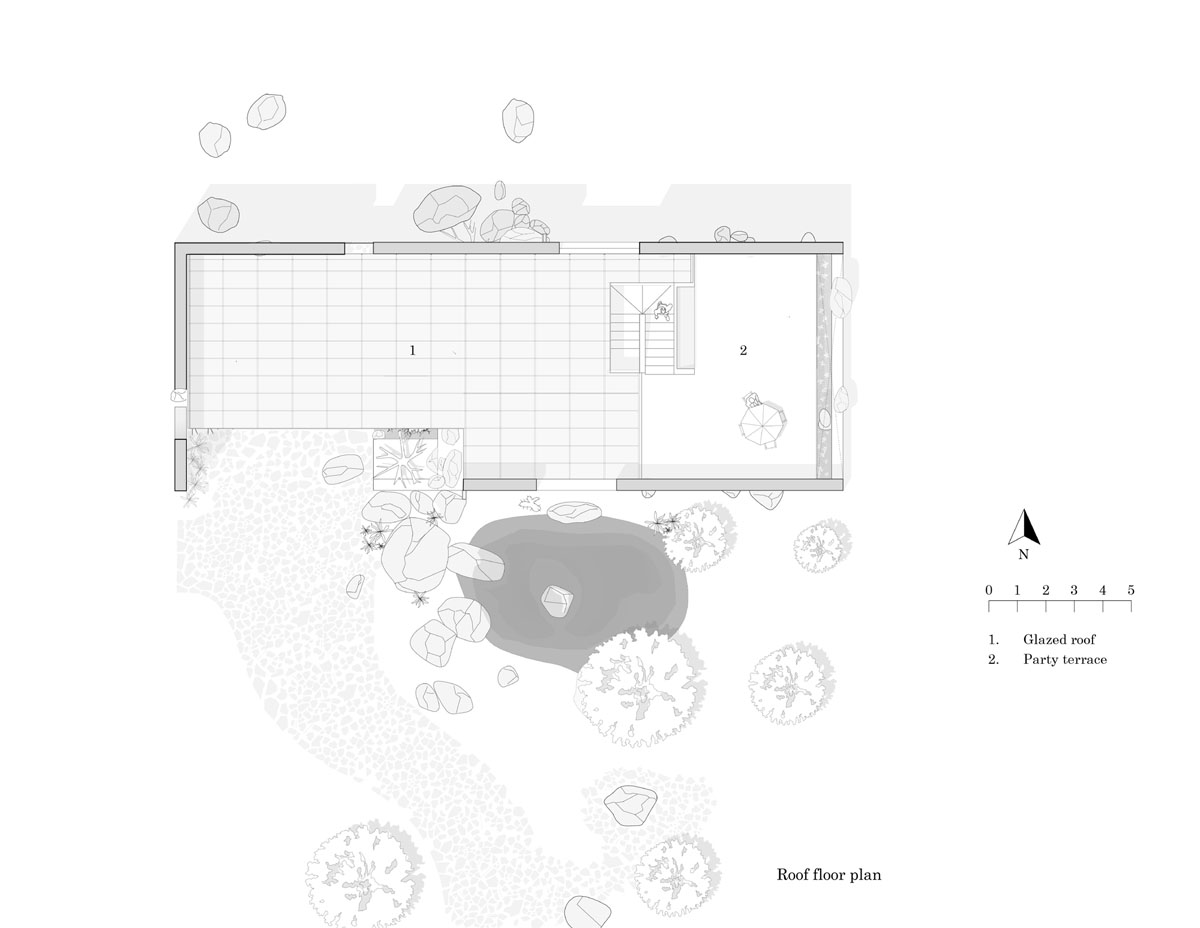
Ceiling floor plan. A Casuarina-ferrocement ceiling expands the space for entertaining guests or simply spending time outdoors with the family.
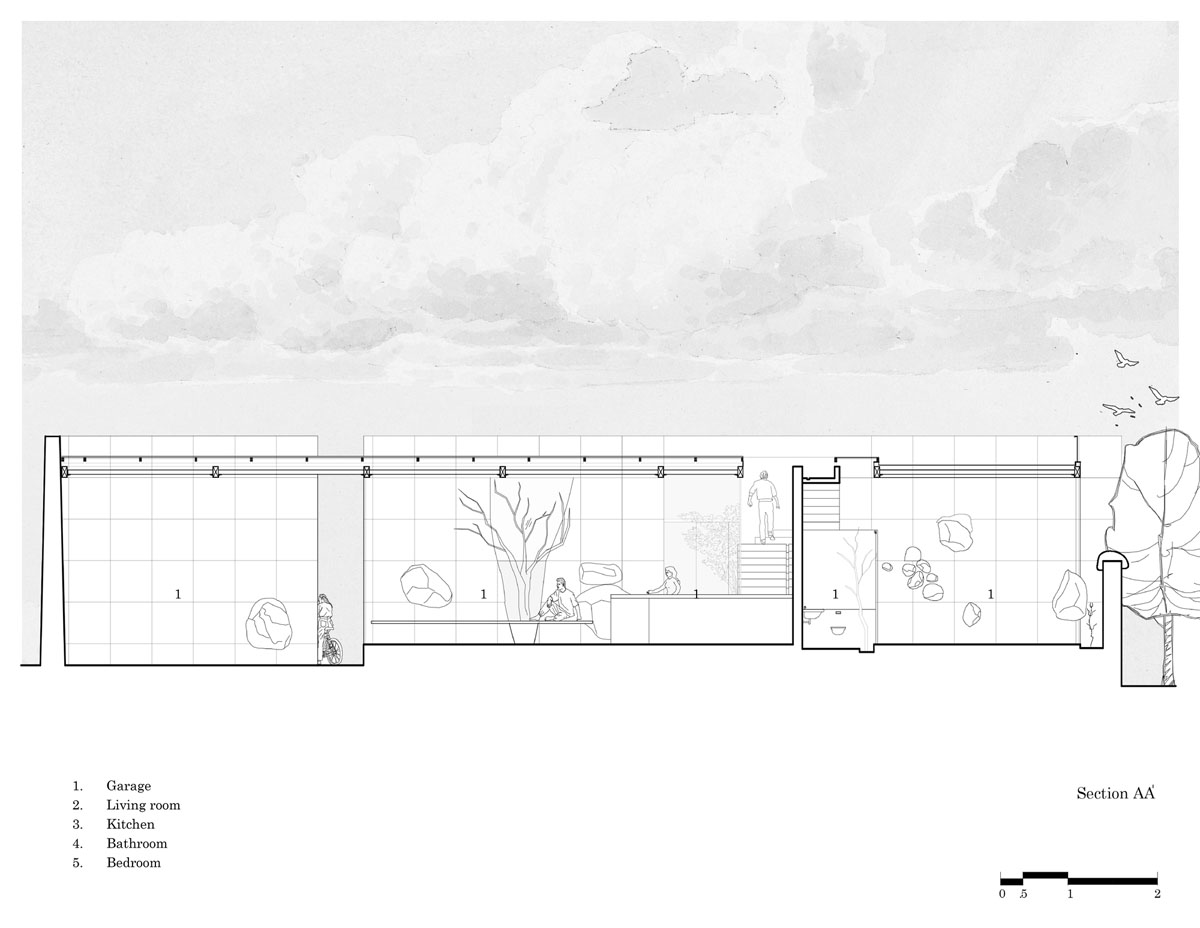
This section drawing shows the garage accessed from the living room and the open plan kitchen layout. The bedrooms and bathrooms are located in the private quarters to the rear of the cottage.
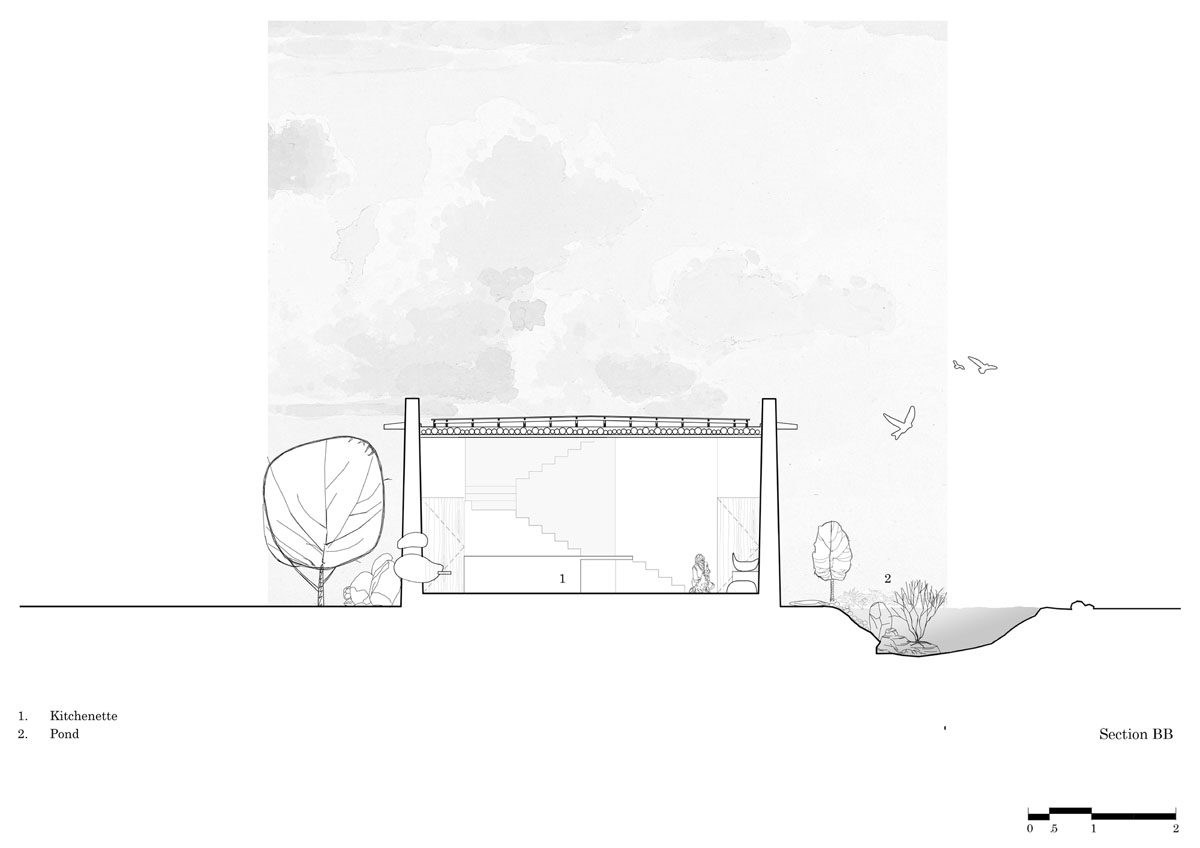
In this sectional drawing, we see the koi fish pond to the front of the property, which has been shaped using river stones.
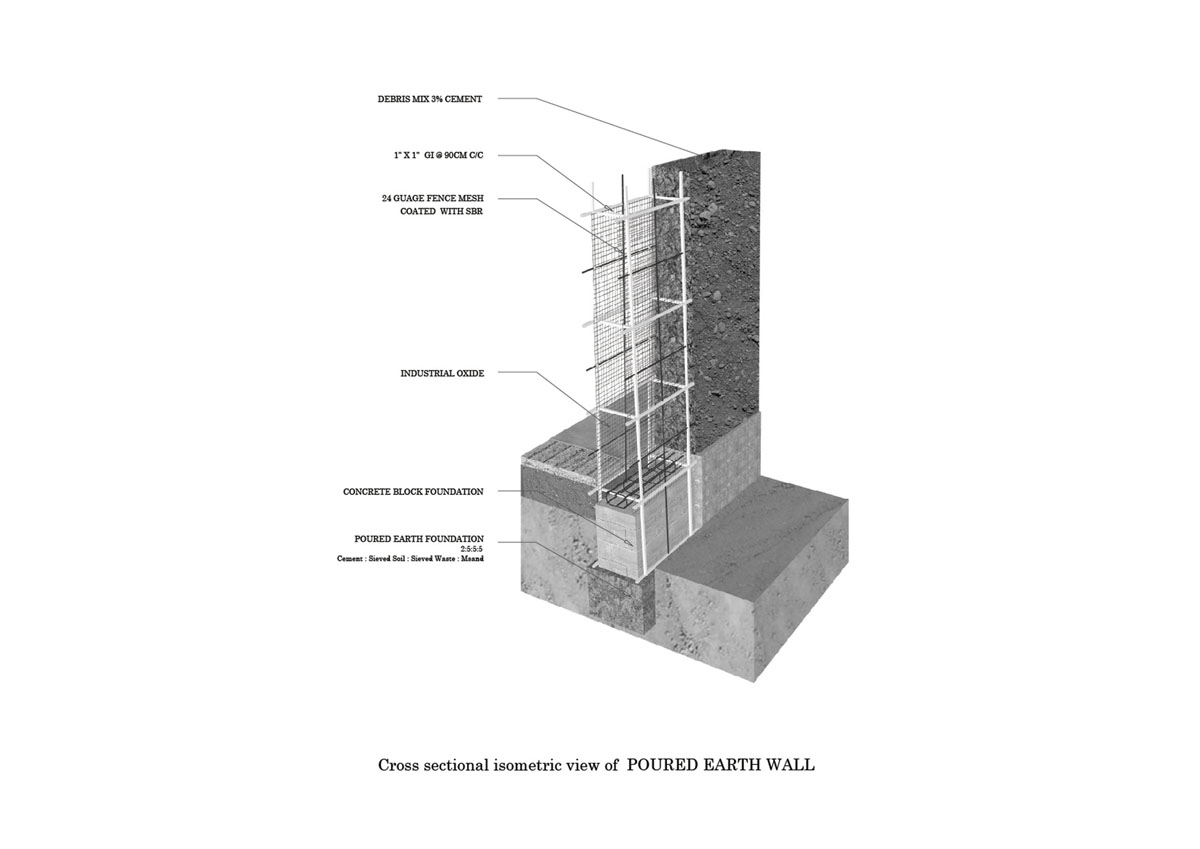
An isometric cross-sectional view of the molded floor walls that make this farmhouse unique.
Section details of a cast floor wall and its foundation configuration.
Suggestions for reading: The Flintstones house in Malibu
Did you like this article?
Share it on any of the following social media channels below to give us your vote. Your feedback helps us improve.