Just another step. Please click on the confirmation link sent to you by e-mail.
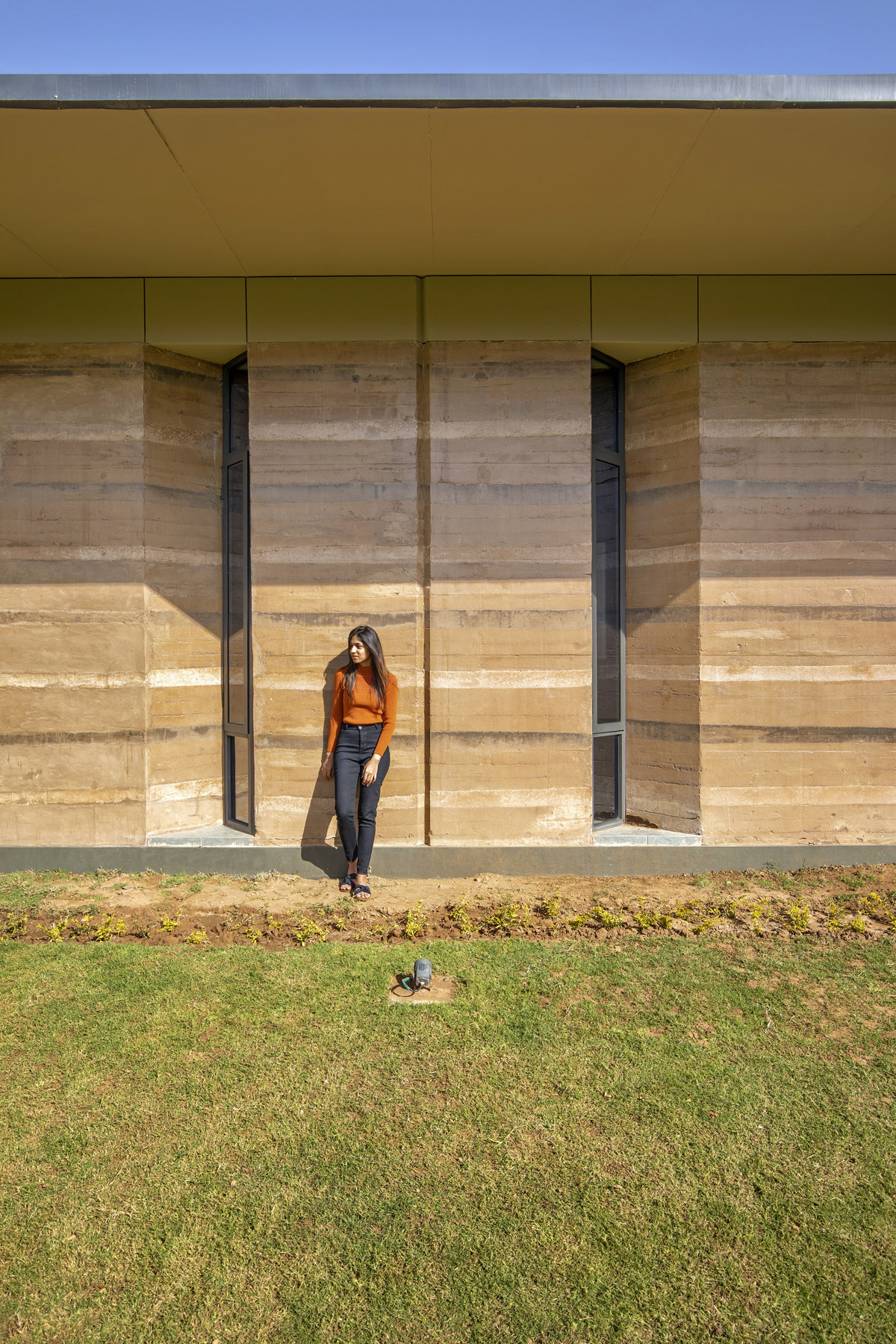
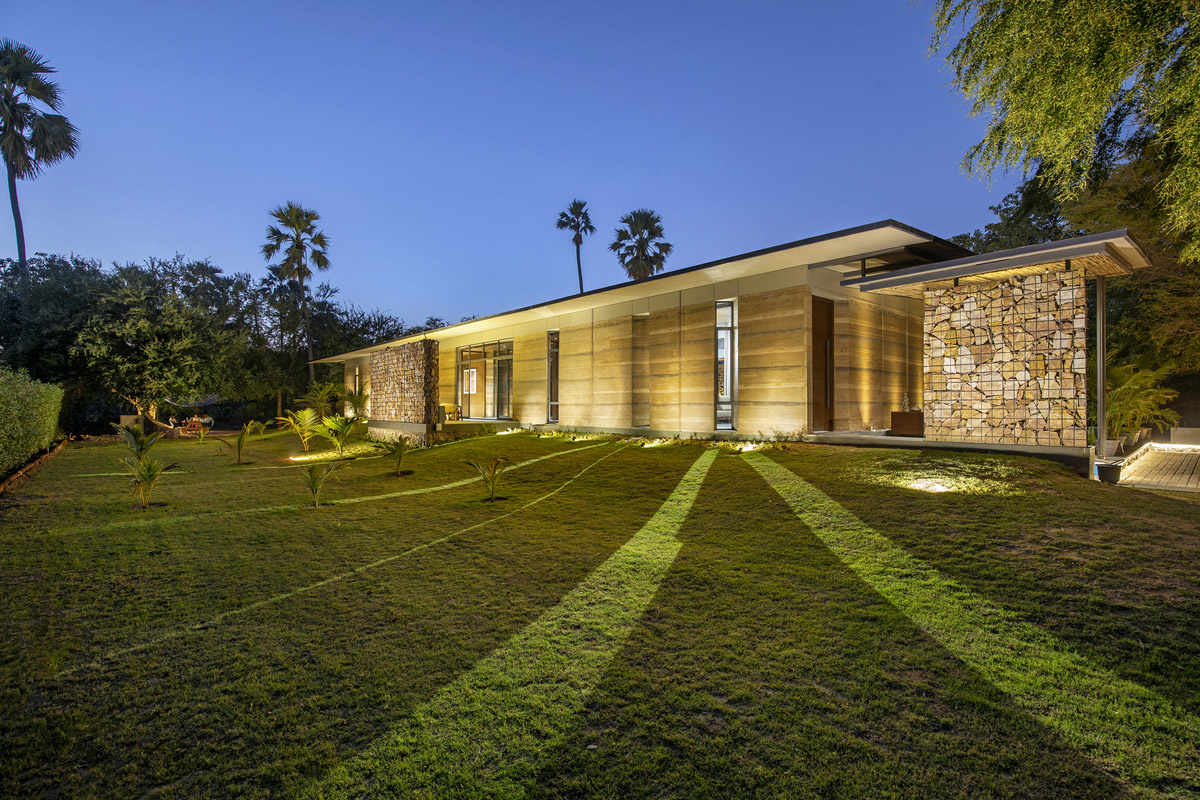
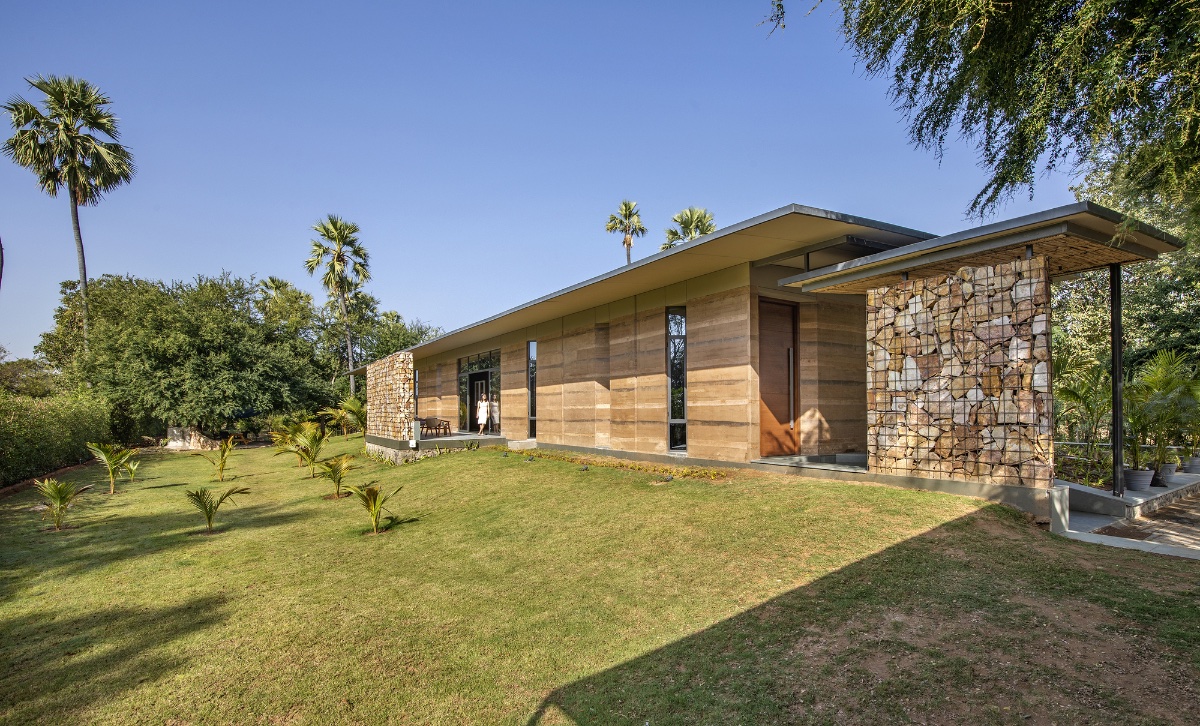
Earth House inspires recalling sustainable living practices from our past. Created by Art & Architecture PartnersThe 3,000-square-foot home has been designed to fit into the natural environment amidst vast farmland. With a thick “crust” of rammed earth and other materials excavated from the site, the structure reduced solar heat gain. This feature keeps the temperature between 7 and 10 degrees cooler than the tropical climate of Gujarat outside. Passive sustainable strategies reduce energy requirements in response to the global climate crisis. Both the facade and the interior of the three bedroom house communicate a minimalist aesthetic with the elements of nature woven through it.
With climate change requiring a conscious effort to change the way we build and live, we must look to reduce our carbon footprint at work and at home. The goal of being environmentally responsible and sustainable is at the heart of this modern home design.
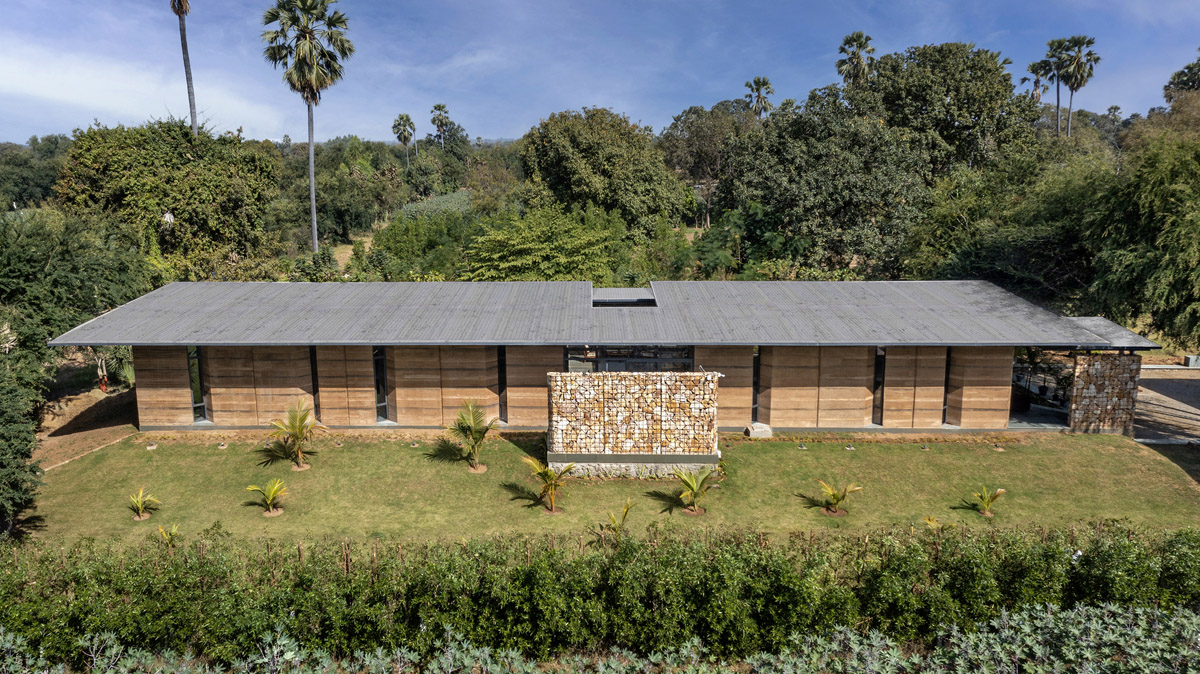
The landscape design was inspired by the local environment. Native plants were selected to reduce irrigation needs and contribute to the passive energy strategy. Earth House is surrounded by the Miyawaki Forest, an organic farm and a mango orchard. Foliage covers the roof, which helps reduce the sun’s heat gain in the house.
The layout of the house has been optimized to create a minimal footprint on the green site. The roof of the net-zero house tends to receive the maximum amount of solar energy for family use.
Inside the house, the modest living space gains visual and tactile warmth from the rough ground wall construction. Half of the living room has a social seating area with wooden coffee tables and a matching wooden lounge set. The other half of the space belongs to the dining kitchen.
Rich wood tones make up a simple kitchen design with a spacious peninsula for cooking and dining. The rest of the kitchen storage is housed in a single tower of cabinets at one end.
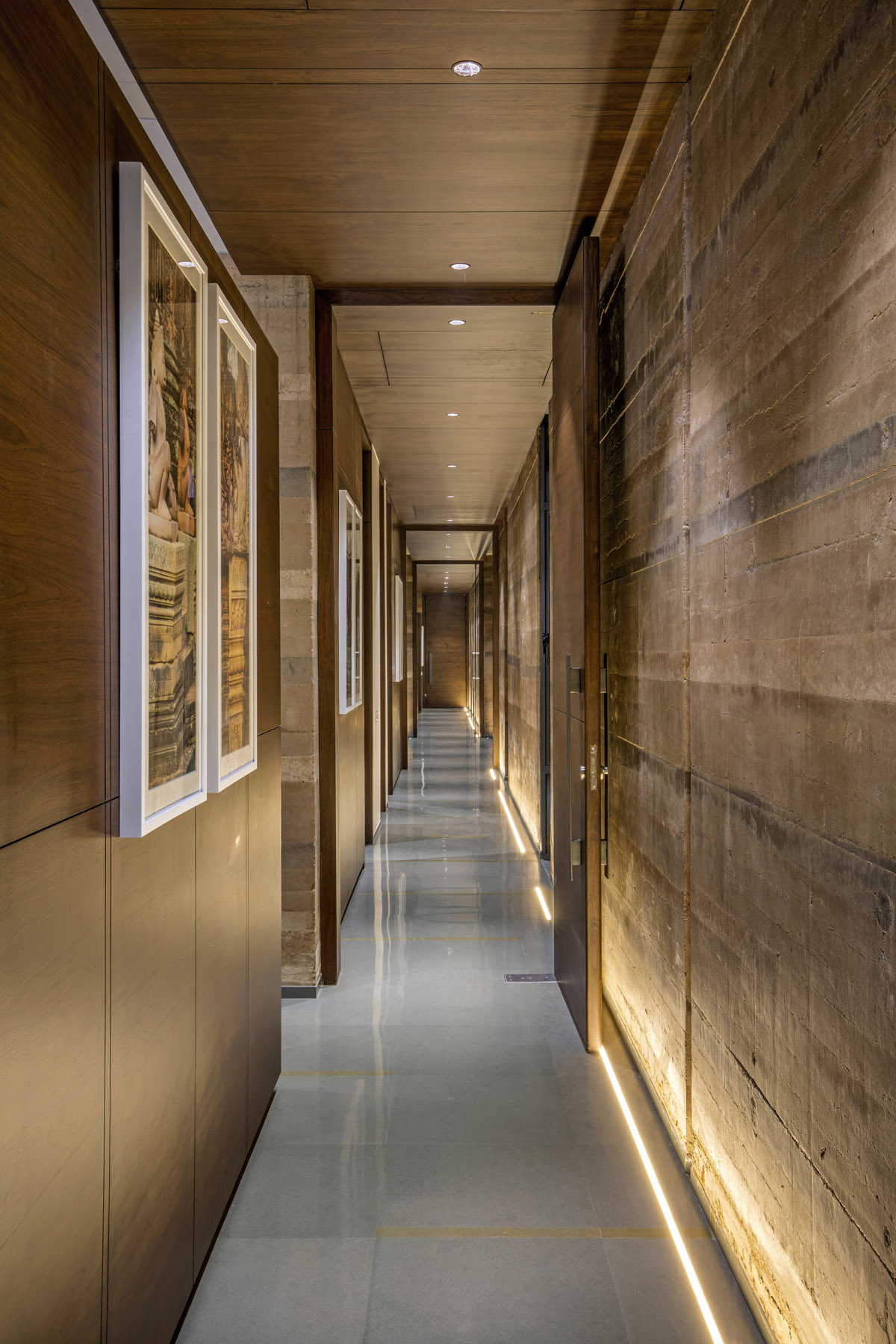
Polished tiles extend along the hallway. LED strips glow brightly from the edge of the reflective floor, creating a warm and luxurious atmosphere.
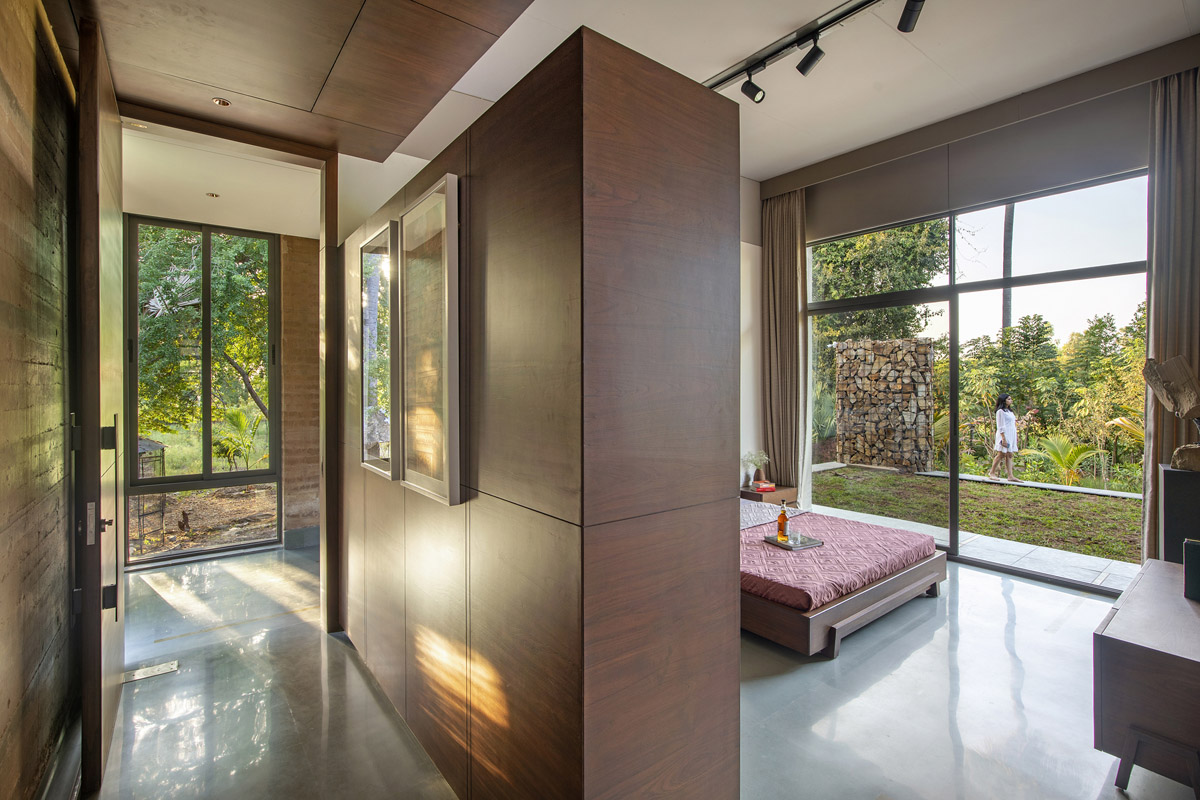
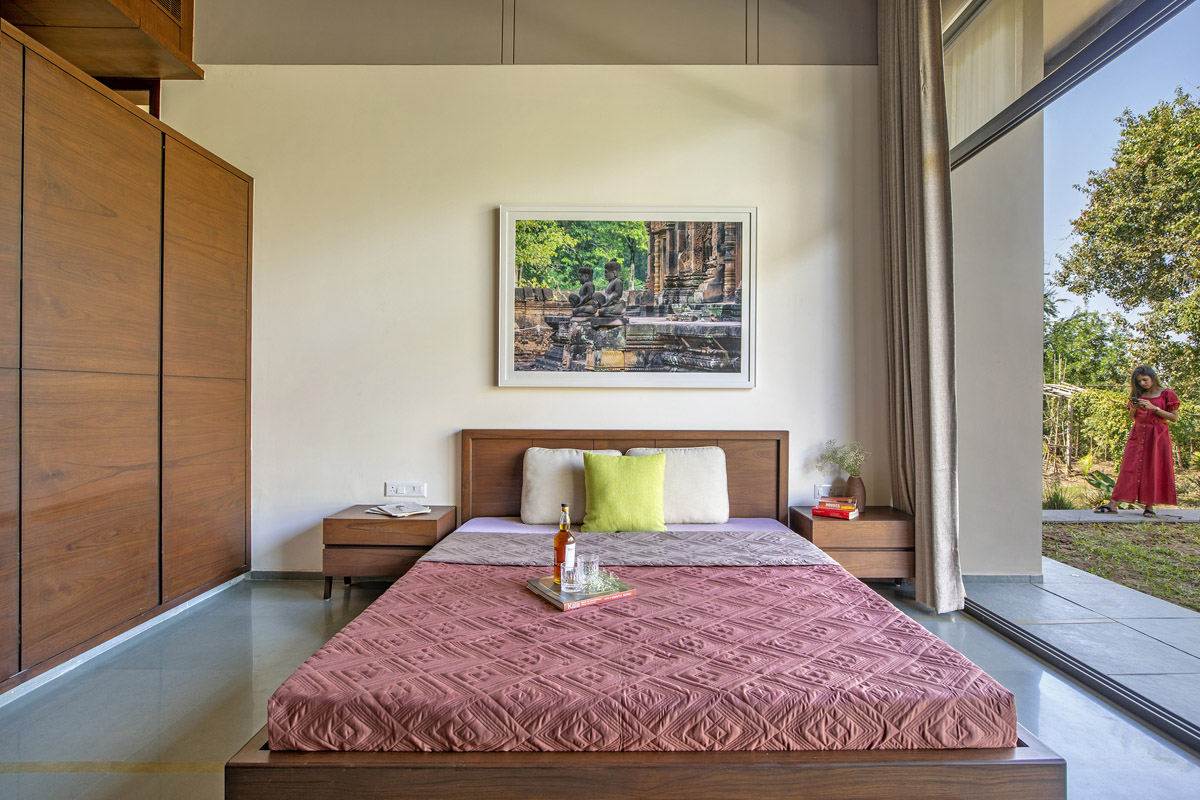
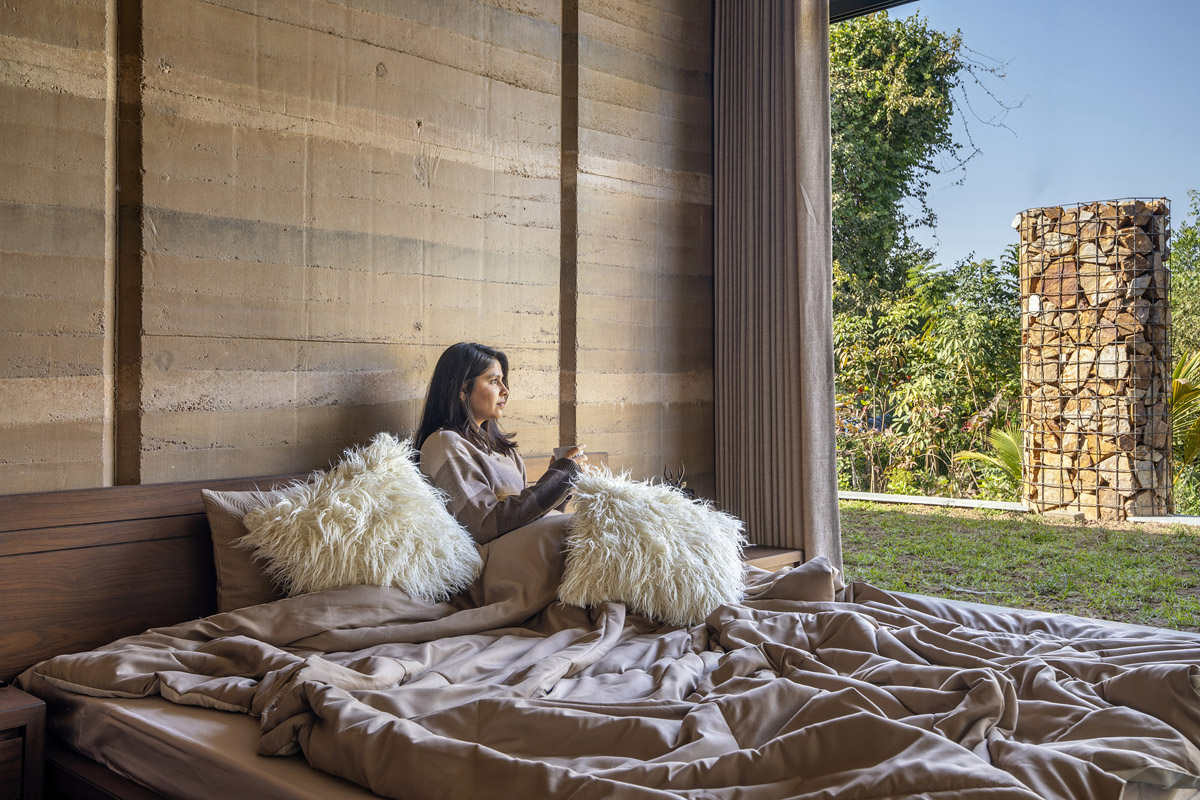
A long corridor leads to three bedrooms. Upon entering the bedroom, the sleeping space is set privately away from the door by a wood-covered storage wall.
Like the rest of the interior, the furniture materials within the modern bedroom are sourced from companies that use recycled materials and use environmentally responsible manufacturing techniques.
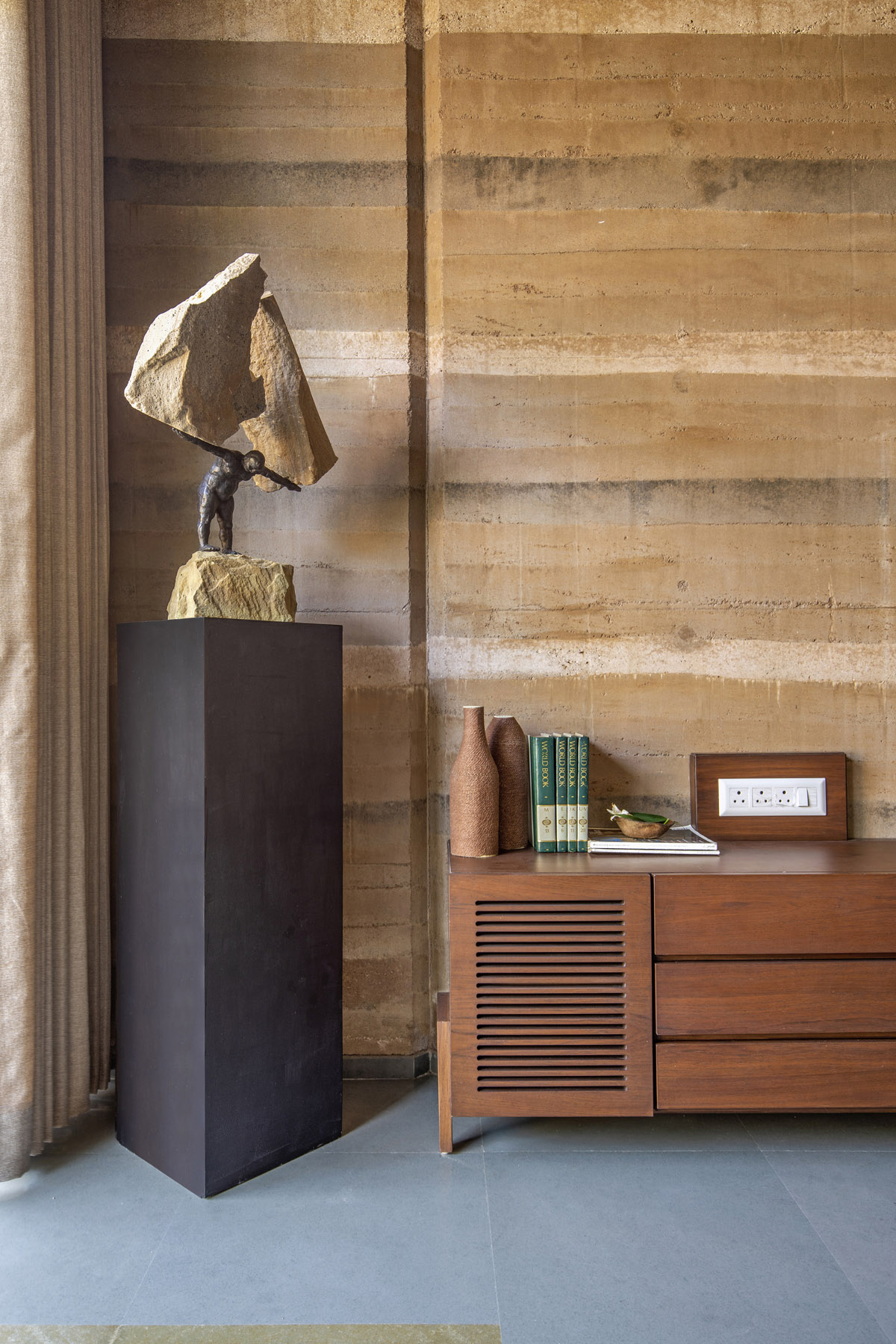
Stone carvings and clay vases complement the natural finish of the earthen walls.
Each space is simply decorated with a peaceful balance of form and function.
Large windows face north in order to get the best daylight and natural ventilation, which negatively reduces energy requirements.
The end of the long corridor finally reaches a luxurious bathroom. Large shower area perched on a pebble bed. Sunlight is filtered through powerful window shutters.
In addition to generating electricity from solar energy, this sustainable cottage grows its own food, harvesting water from heavy rains.
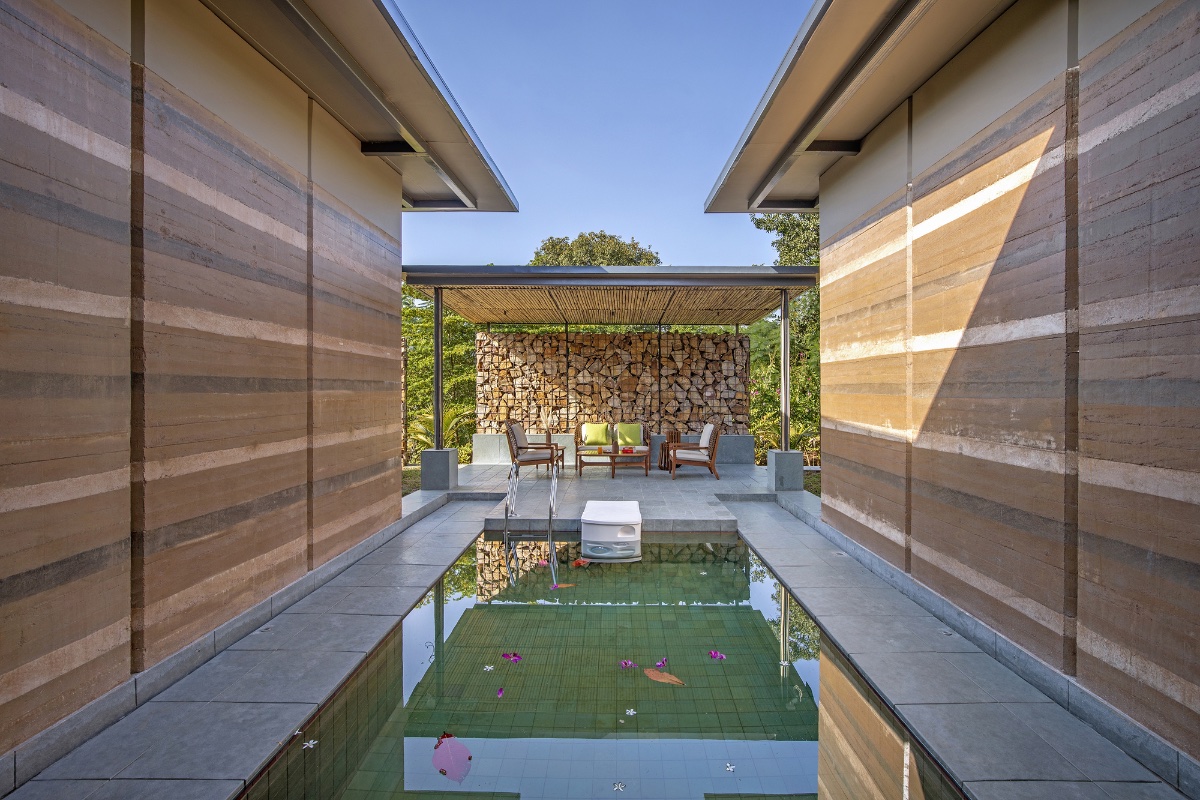
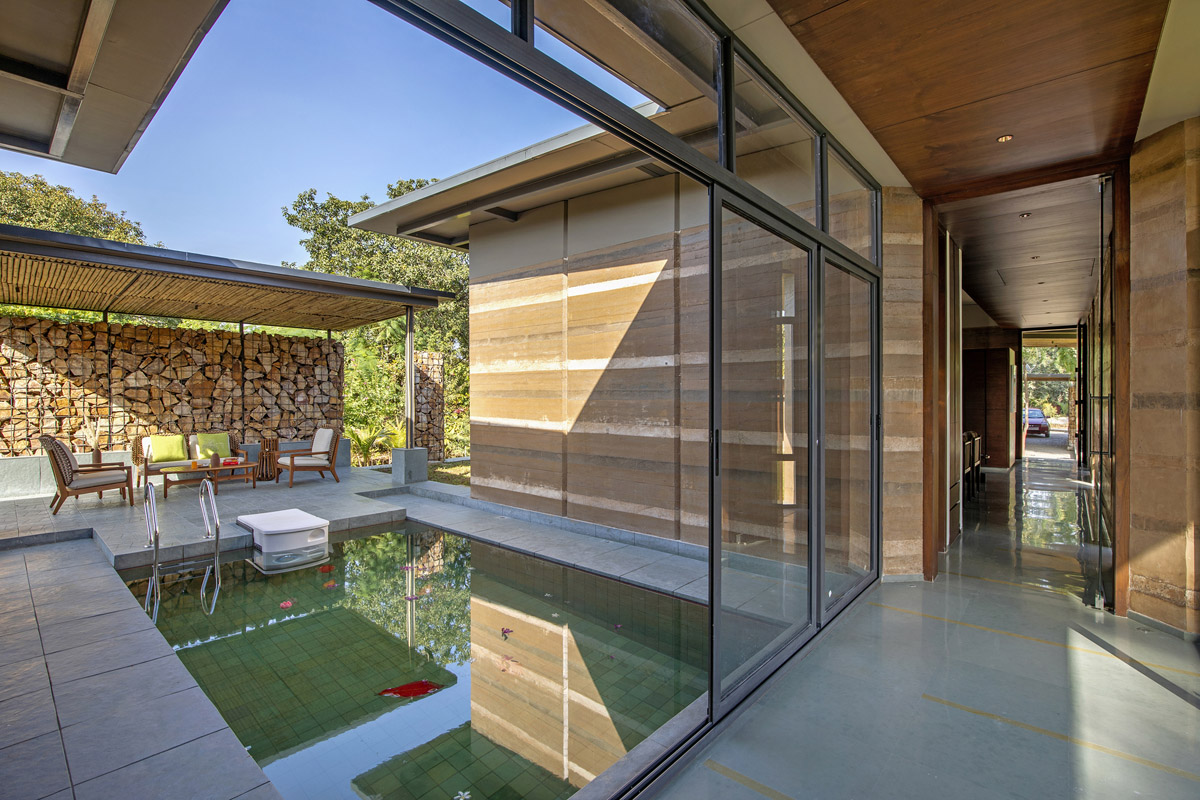
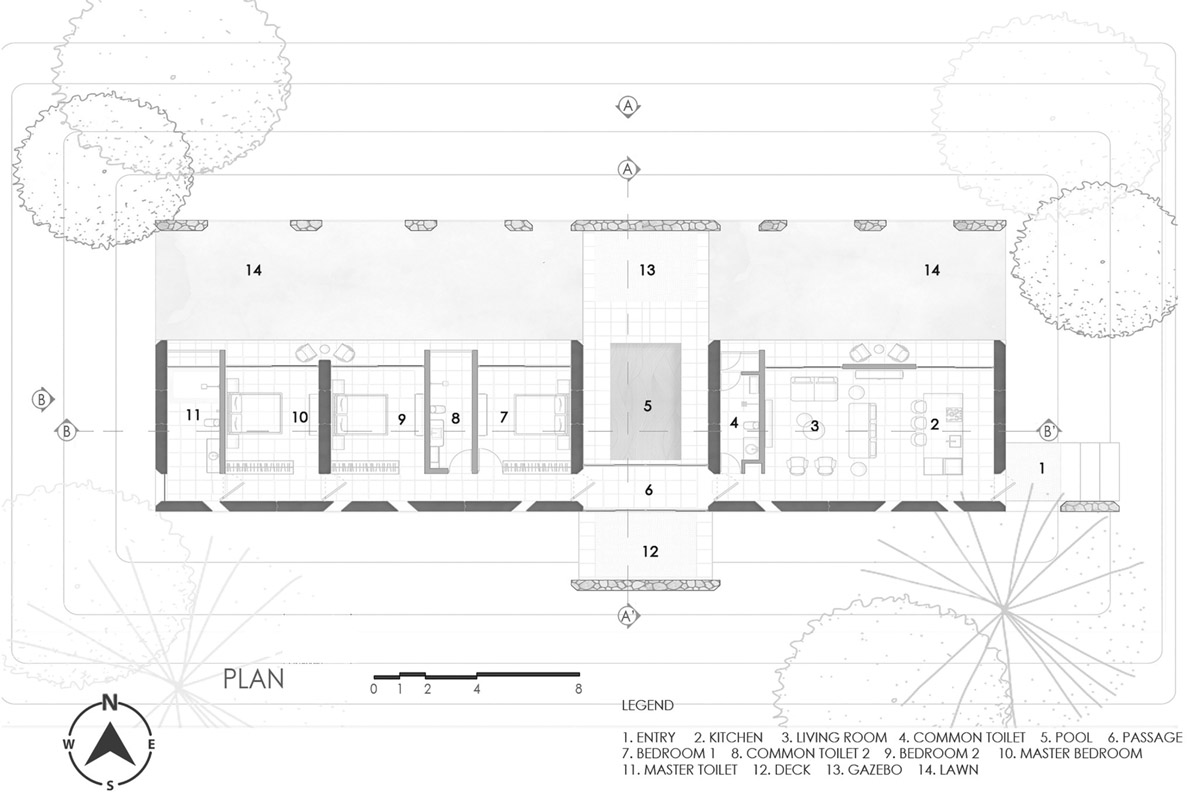
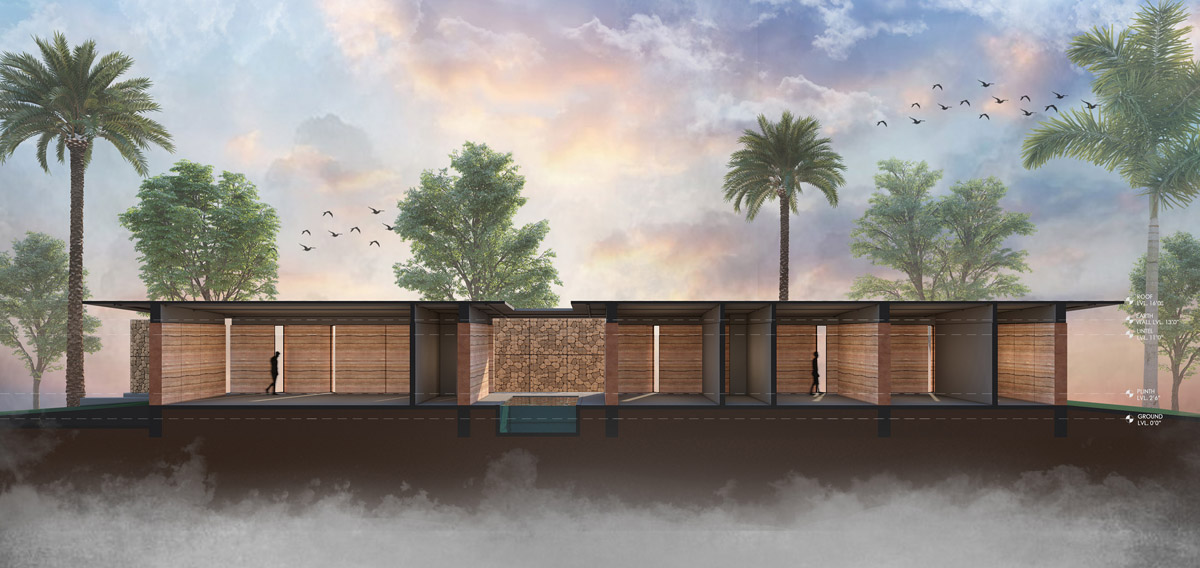
The three bedrooms are separated from the social living space by a central leisure area consisting of a pool, balcony and patio.
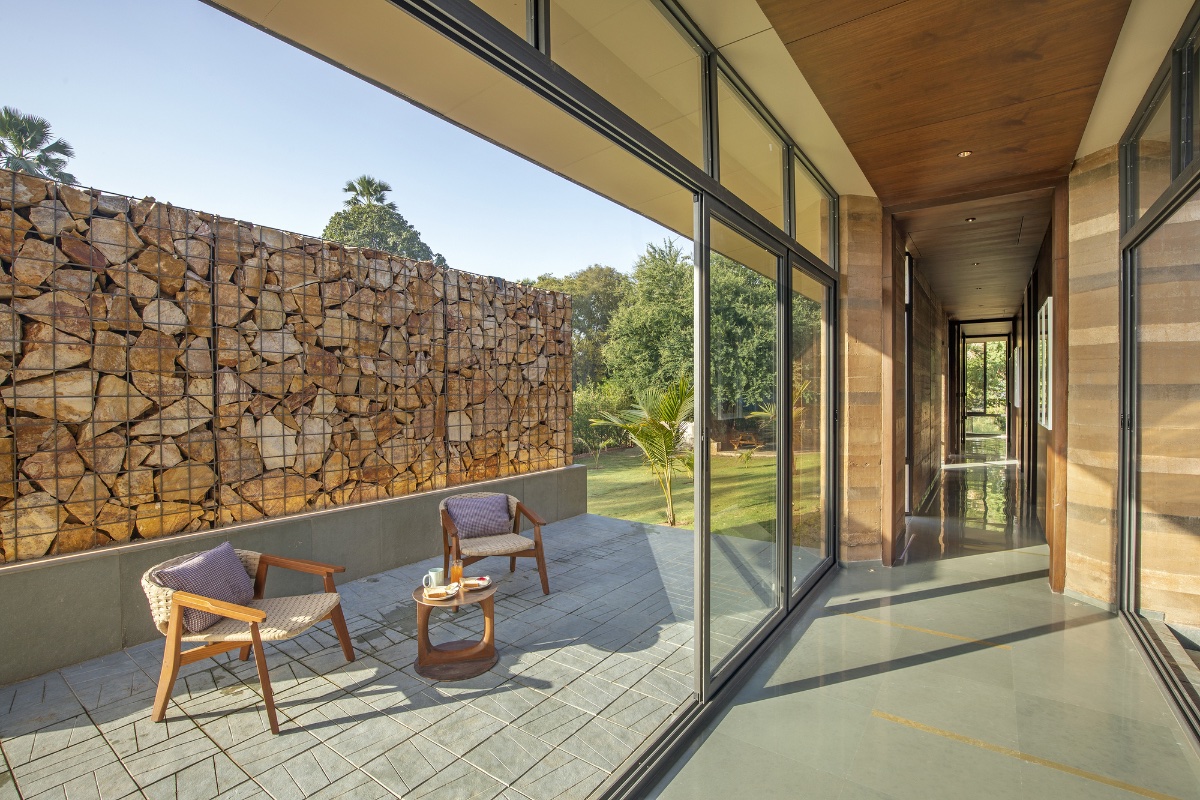
Easily available local rock fills the gabion walls in the yard. Walls provide privacy and sculptural moments around the house. Two outdoor chairs and a small coffee table make a nice place to talk.
Moving from the courtyard to the other end of the pool, the gazebo provides a wonderful, shaded respite on a more spacious terrace area.
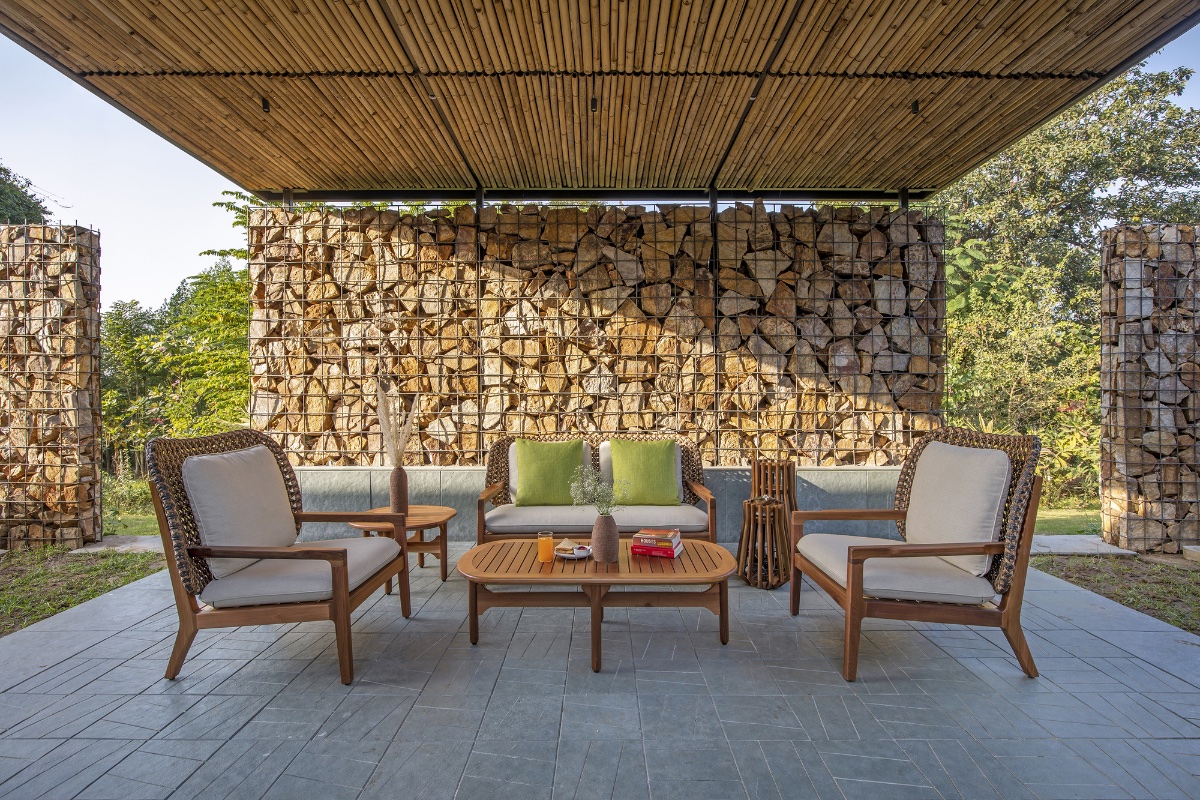
Two padded chairs and a small sofa form an outdoor lounge in the gazebo. An outdoor coffee table and small wooden side table provide landing spots for drinks and snacks. Green accent pillows are inspired by the surrounding landscape that shimmers between the dirt walls.
Glass doors provide a single, uninterrupted view from the shaded poolside sitting area to the home’s foyer, and toward the sunny patio.
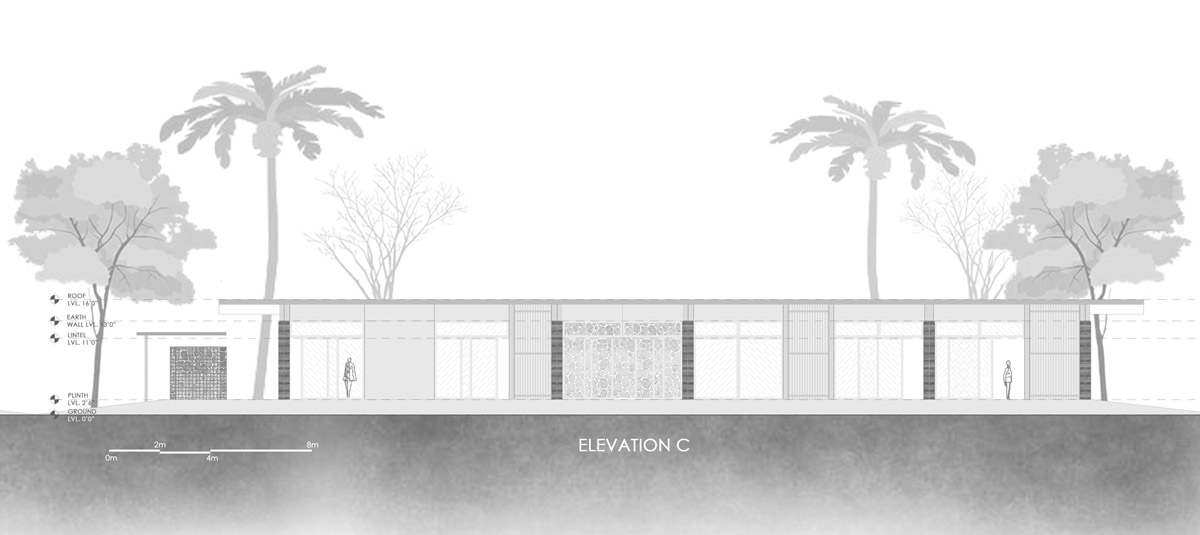
From the outside perimeter of the house, the outside seating areas and pool area are protected from direct view by gabion walls filled with rocks. The roof level rolls low under the treetops to sympathetically immerse the house in the lush landscape.
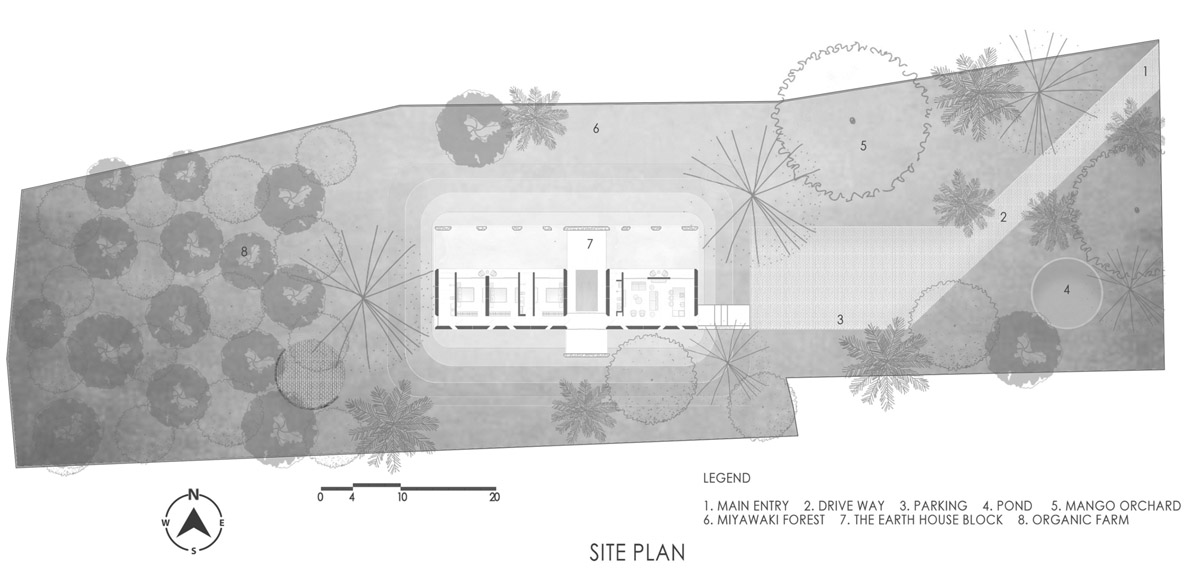
In the site plan, we can see how the entry leads to the property via a long shaded walkway that moves between the existing trees. It passes by a mango orchard on one side and a beautiful pond on the other. A narrow driveway opens onto a large parking area on the east side of the house. The organic farm that feeds the family is located to the west.
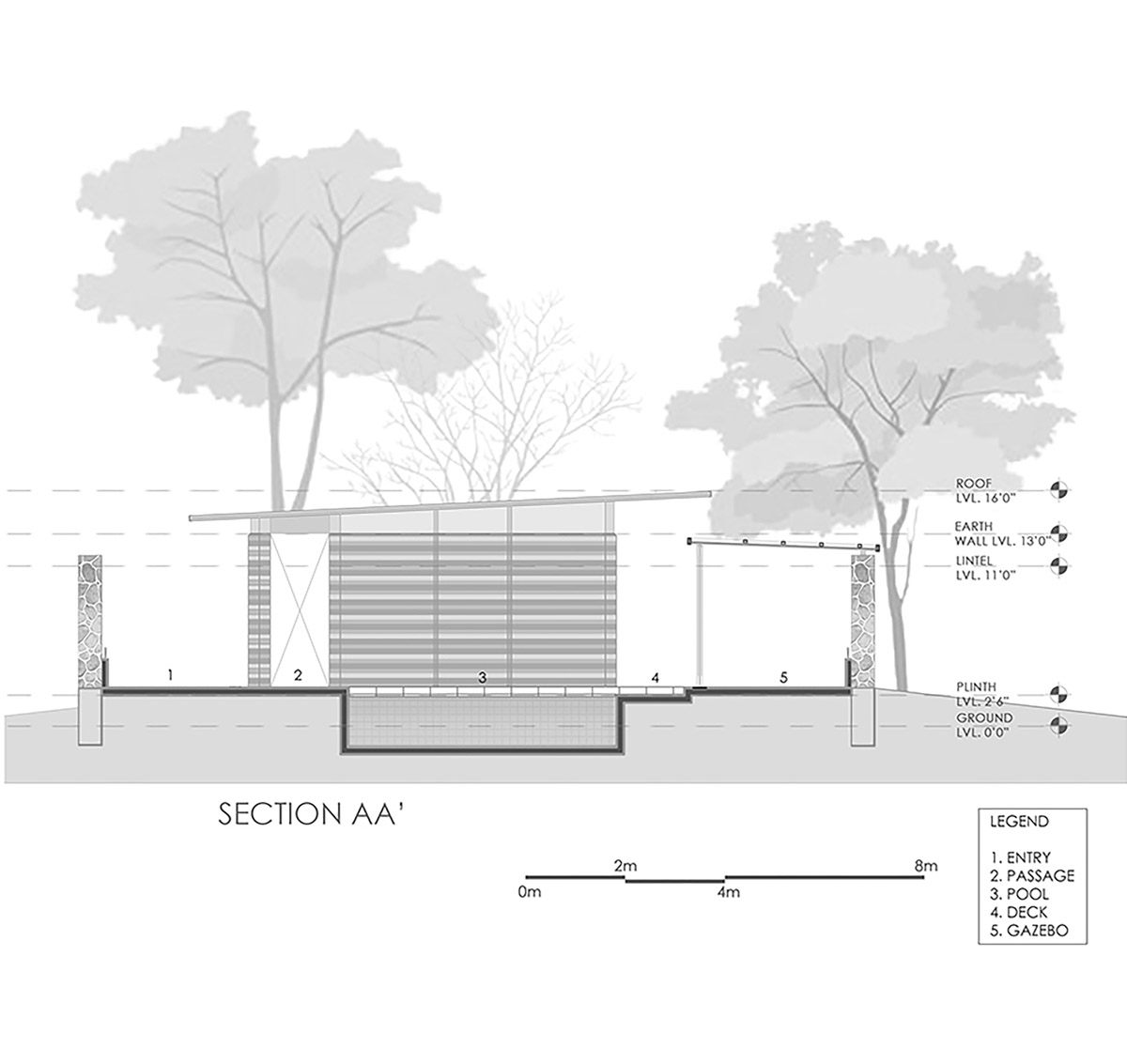
Drawing section AA of this active sustainable design illustrates the roof slope maximizing the home’s solar generation.
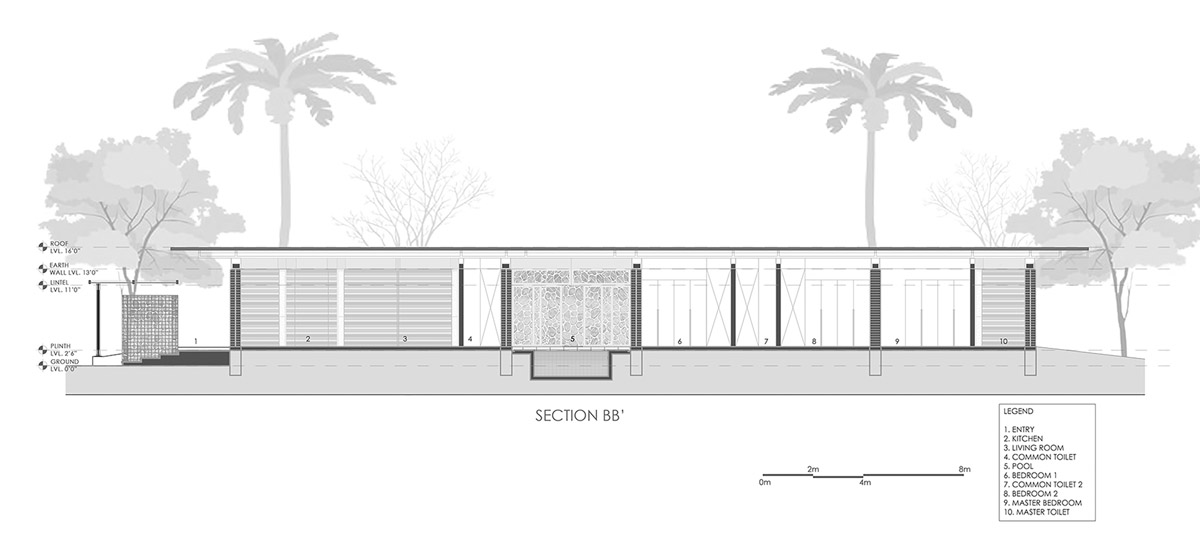
The BB tomogram provides insight into the complete layout and flow. With the entry into the house designed next to the kitchen, guests are welcomed directly into the social living space. There is a guest bathroom split between the living room and the leisure space with pool.
In the floor plan, we can estimate the exaggerated length of the connective corridor. The shared bathroom is located between the first and second bedrooms, while the master bathroom stands apart from the common areas.
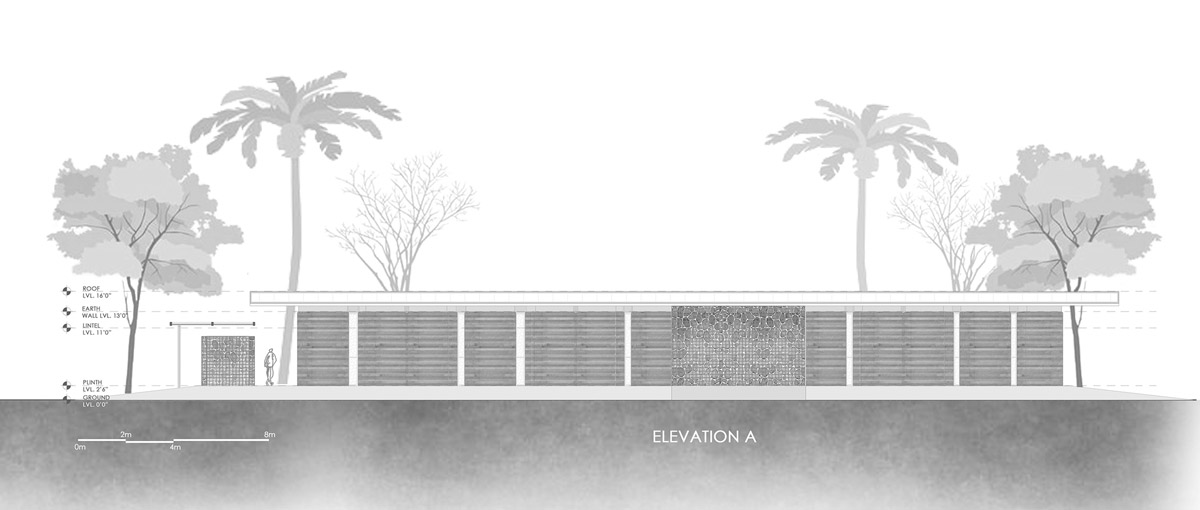
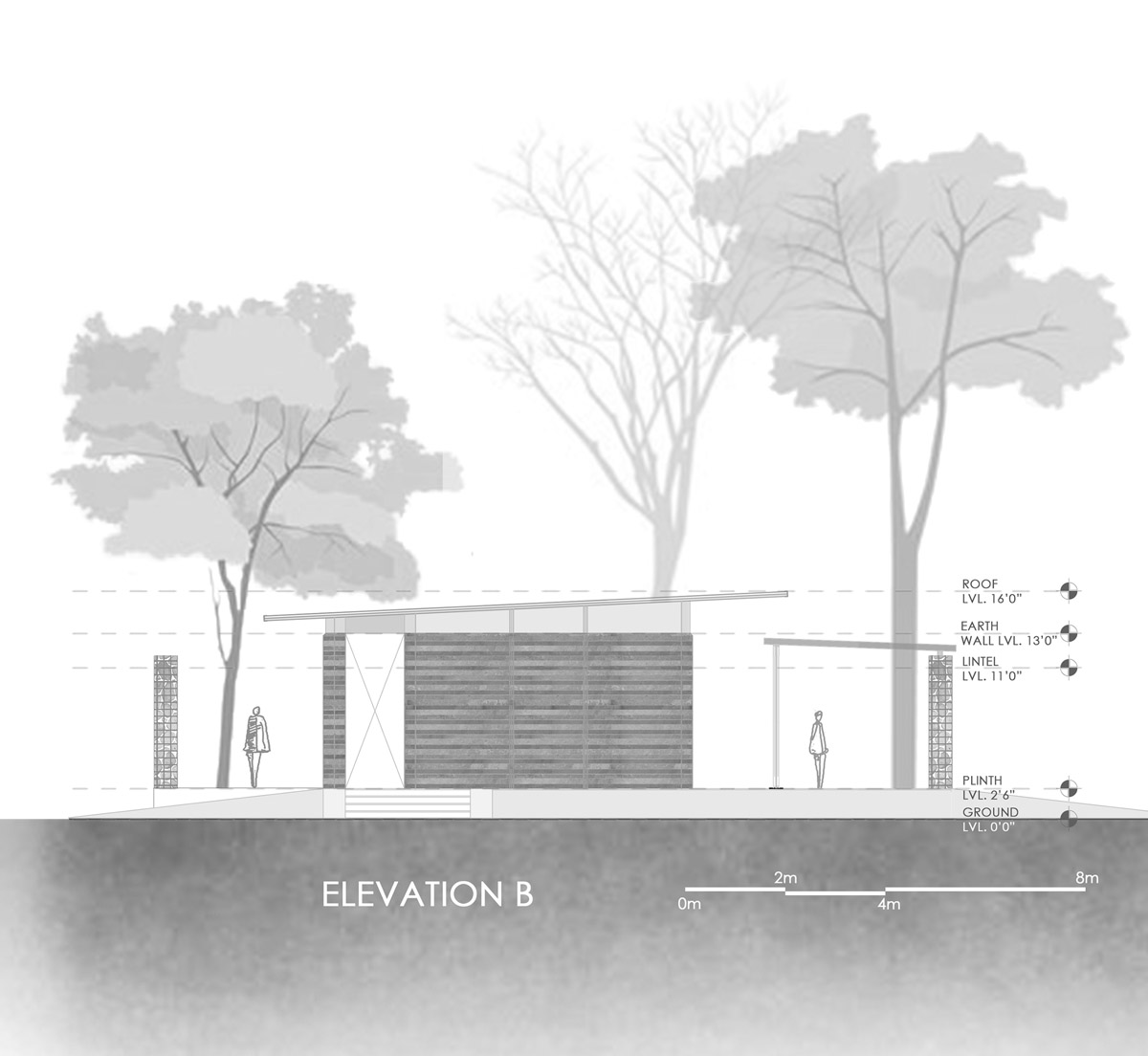
Height drawing A, showing the base level, lintel, ground wall, and ceiling height.
Drawing of elevation B, as viewed from the east side.



![A modern earth house that emphasizes sustainability [Video]](http://cdn.home-designing.com/wp-content/uploads/2022/09/wooden-coffee-tables.jpg "A modern earth house that emphasizes sustainability [Video]")